Lesson 22 · Foundational Components
Movement: 止 / 走 / 辶
Lesson 18 taught 足 (zú, "foot"), the component behind 路 (lù, "road") and 跑 (pǎo, "to run"). This lesson takes the other foot in the writing system. 止, 走 and 辶 all descend from a single drawing of a footprint, and between them they sit inside a large share of the characters you will meet on transit signage, street names and doorways.
They are also, by frequency, the most valuable three components remaining. 辶 alone carries 这 (zhè, "this", ranked 11th most frequent character in modern Chinese), 过 (guò, "to pass", 46th), 道 (dào, "way, road", 52nd), 还 (hái, "still", 80th) and 进 (jìn, "to enter", 81st). (hanziDB frequency list)
Your three new components
Quick recall — click each card to flip it:
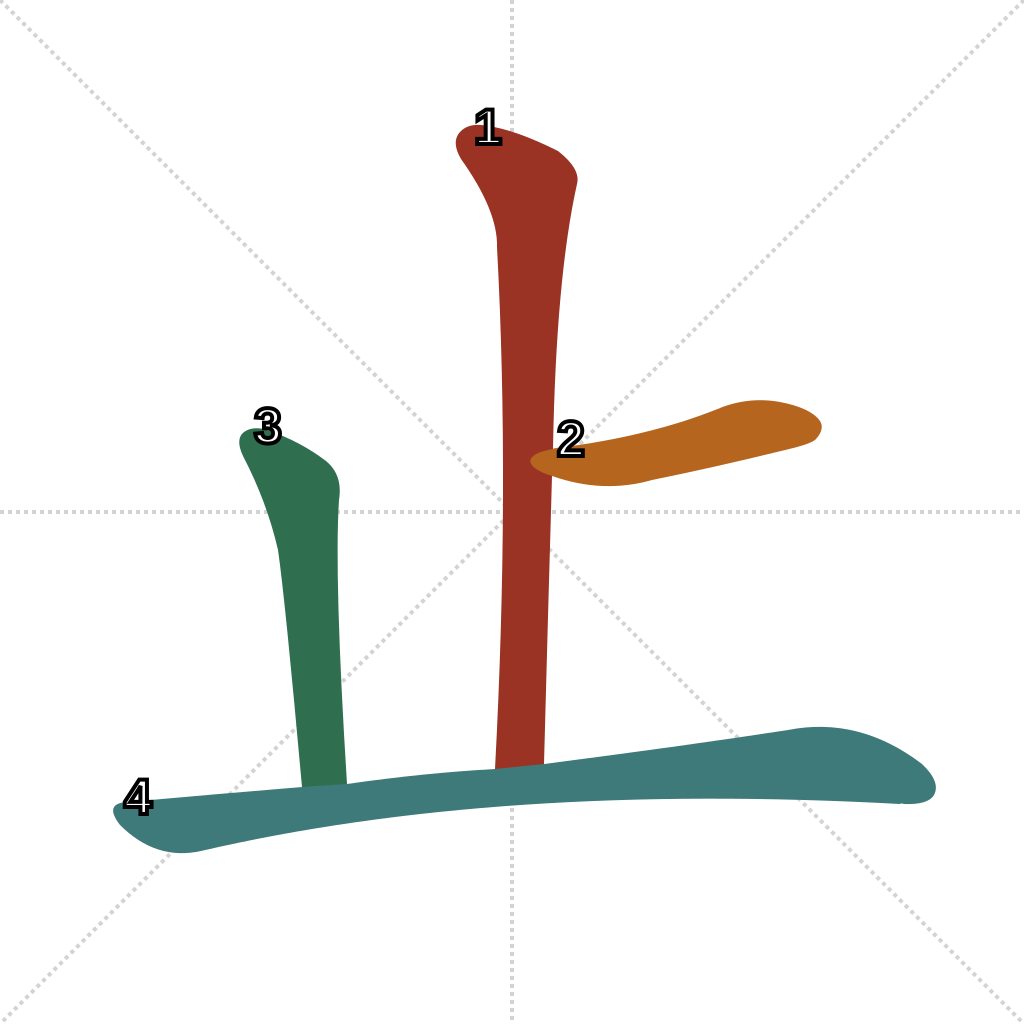
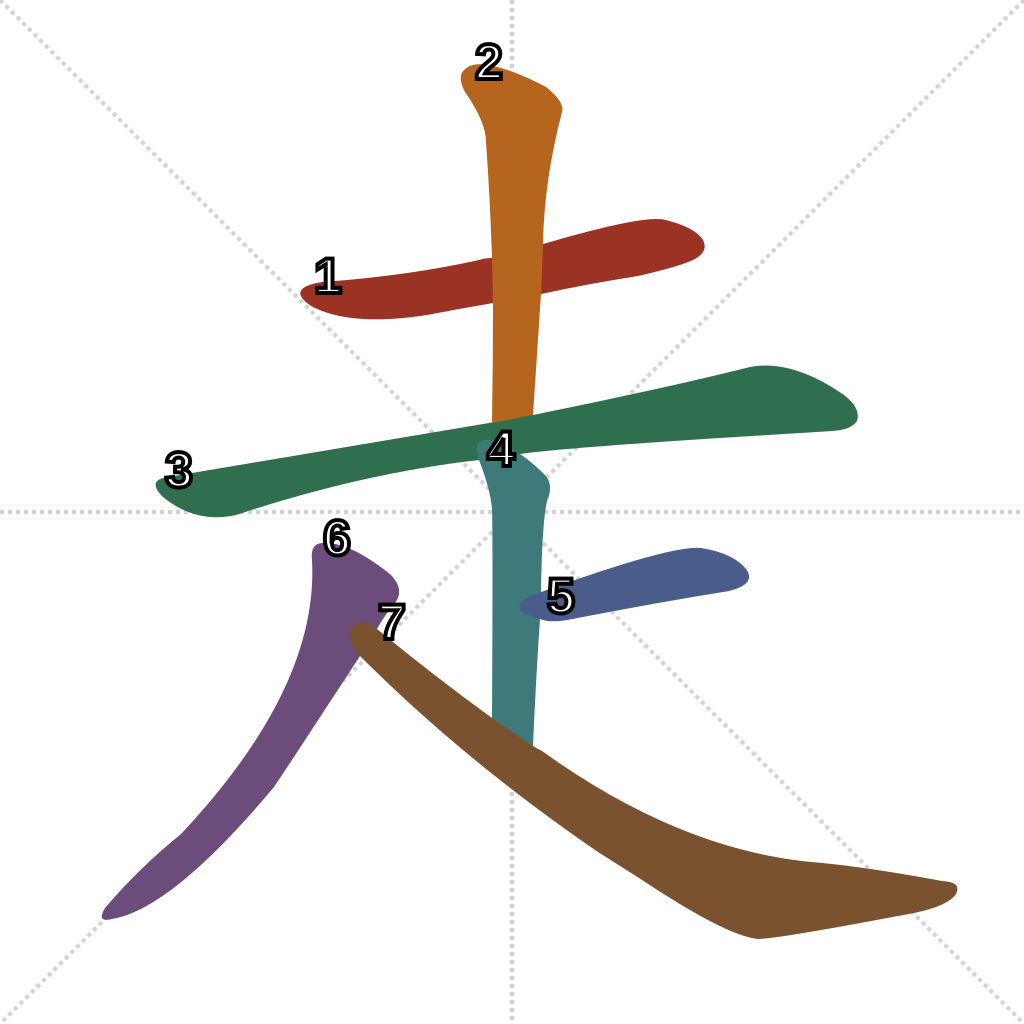
Stroke order
止 — 4 strokes
走 — 7 strokes
辶 — 3 strokes
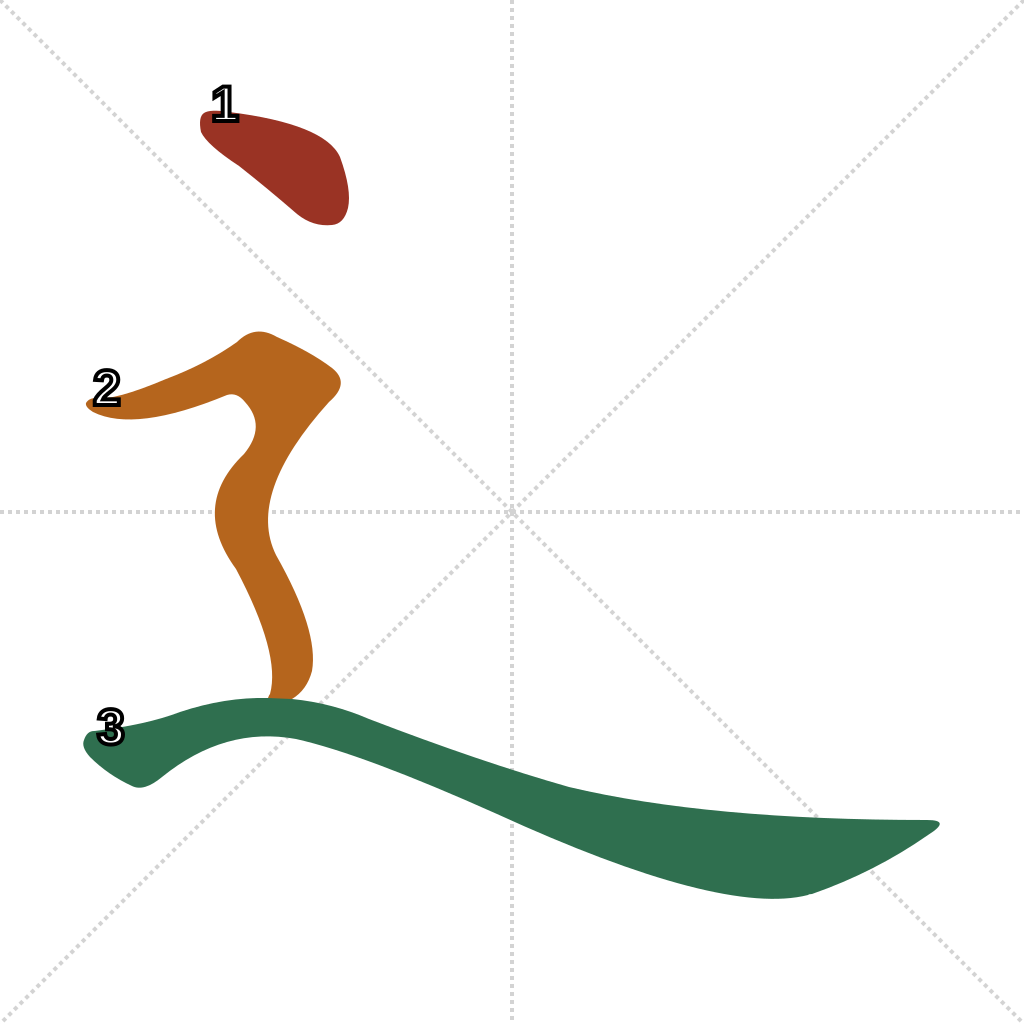
The third stroke of 辶 is the long sweeping base that the rest of the character sits on. Because it is written last, everything 辶 wraps is drawn first, then the sweep is laid underneath it.
Examples using these components
止 keeps its original "foot" sense inside 趾, but here it supplies the sound rather than the meaning:
趾toe
足 (foot) carries the meaning; 止 (zhǐ) carries the pronunciation. (Wiktionary: 趾)
走 joins Lesson 18's 路 to make the ordinary verb for going on foot:
走路to walk
Literally "to go the road".
辶 wraps Lesson 19's 力 to give a very common character for position:
边side, edge
A word of caution: 力 is not doing its usual work here. 边 was simplified from traditional 邊 in the 1956 reform, and the bulky right-hand element of 邊 was replaced by 力 purely because 力 is quick to write. It contributes neither meaning nor sound. (Wiktionary: 边)
And the one you will meet on doors, using 辶 with 井 (jǐng, "a well"):
进to enter, to advance
Traditional 進 used 隹 (zhuī, "short-tailed bird") on the right; the 1956 reform swapped it for 井, which approximates the sound. Pair it with Lesson 12's 请 (qǐng, "please") and you have 请进 (qǐng jìn) — please come in, printed on shop doors everywhere. (Wiktionary: 进)
Check your recall
Wiktionary reads the oldest form of 止 as a picture of a:
The top of 走 looks like 土, but it is historically:
辶 is a compressed 辵, which combines 彳 ("a step") with:
In 趾 (足 + 止), the 止 supplies:
走路 (zǒu lù) as an everyday phrase means:
力 was chosen for simplified 边 on the strength of its:
Go further
Etymology sources for every character above are linked inline. For the rigorous version of any of them, see the Outlier Dictionary of Chinese Characters, which classifies 力 in 边 as exactly the kind of empty, shape-only component this lesson describes.
Out in the world: 请进 sits on shop doors, 出口 (from Lesson 4) and 进 mark the two directions through any barrier or station gate, and 走 appears in nearly every instruction about going somewhere on foot. Now that you hold 辶, start looking for that sweeping base stroke — once you can see it, the character sitting on top of it is usually about going, coming or passing.