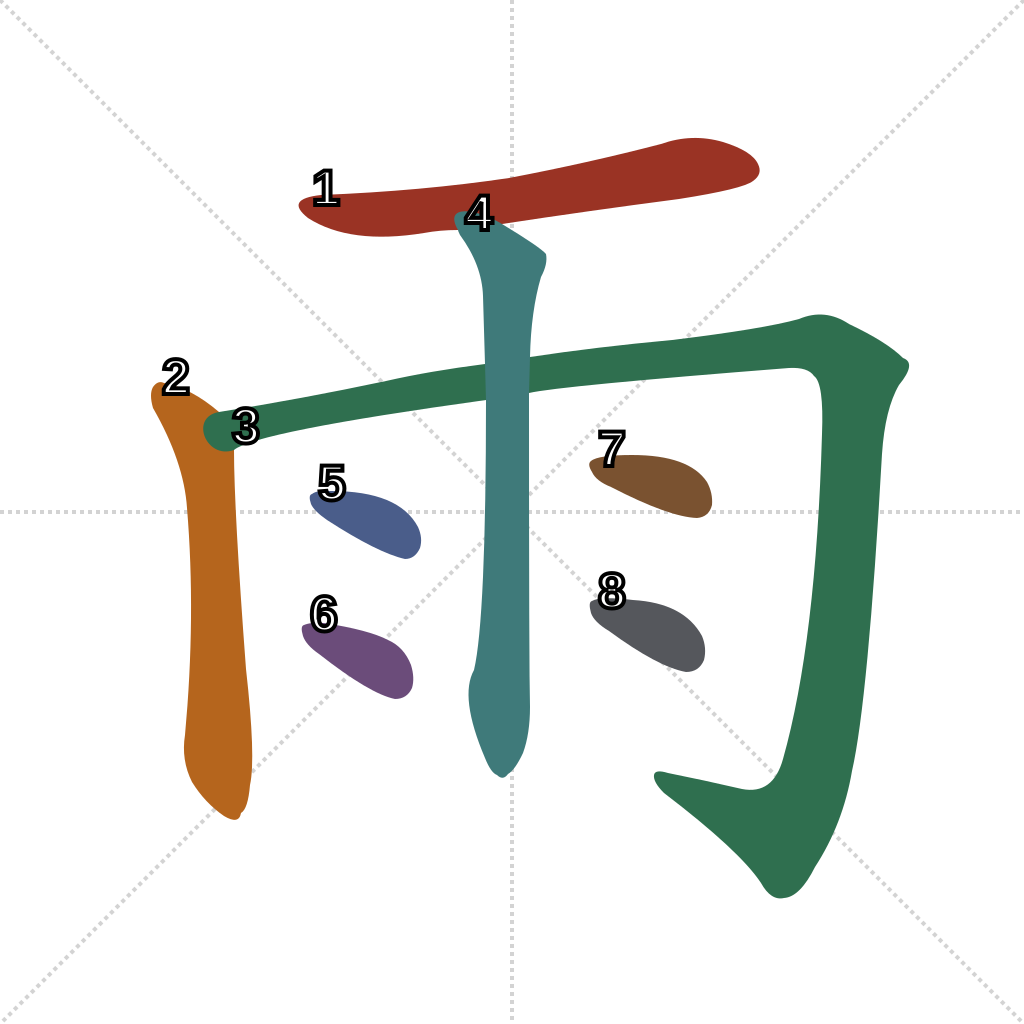
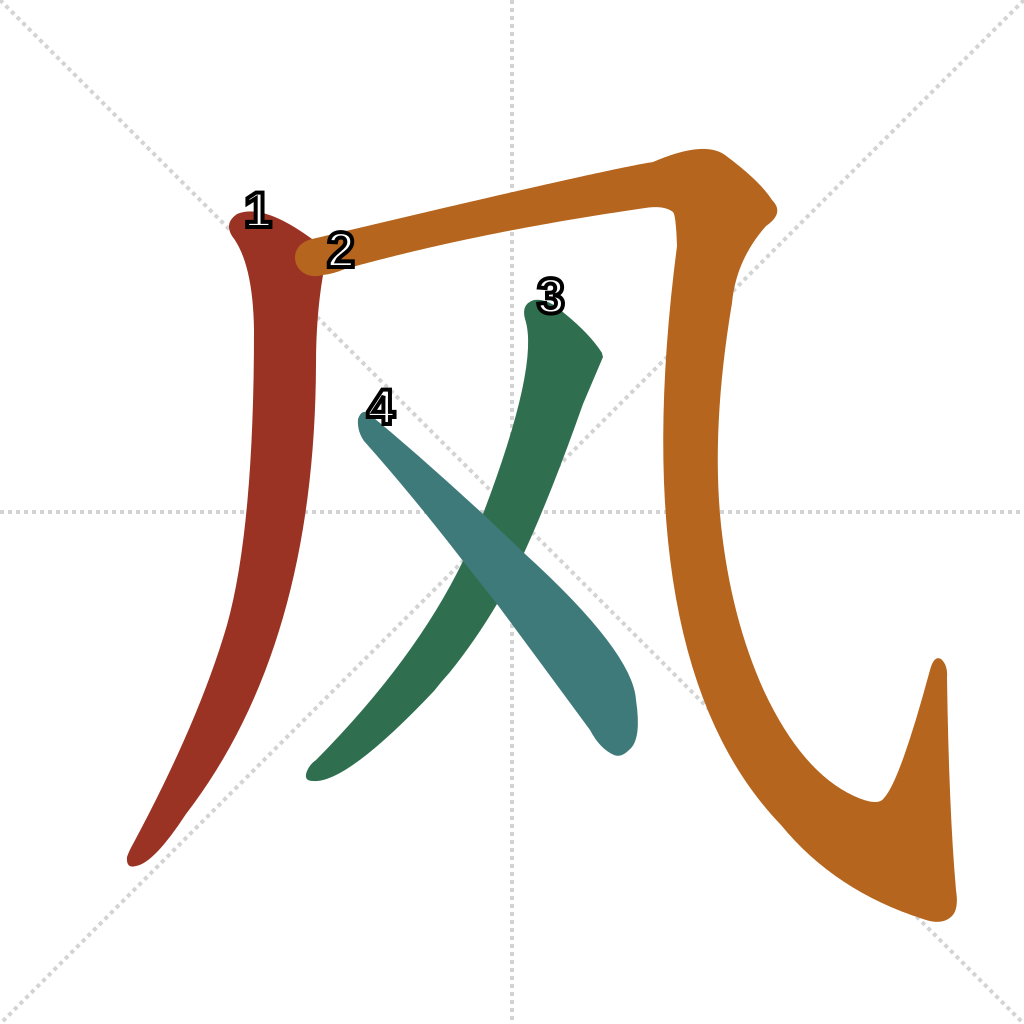
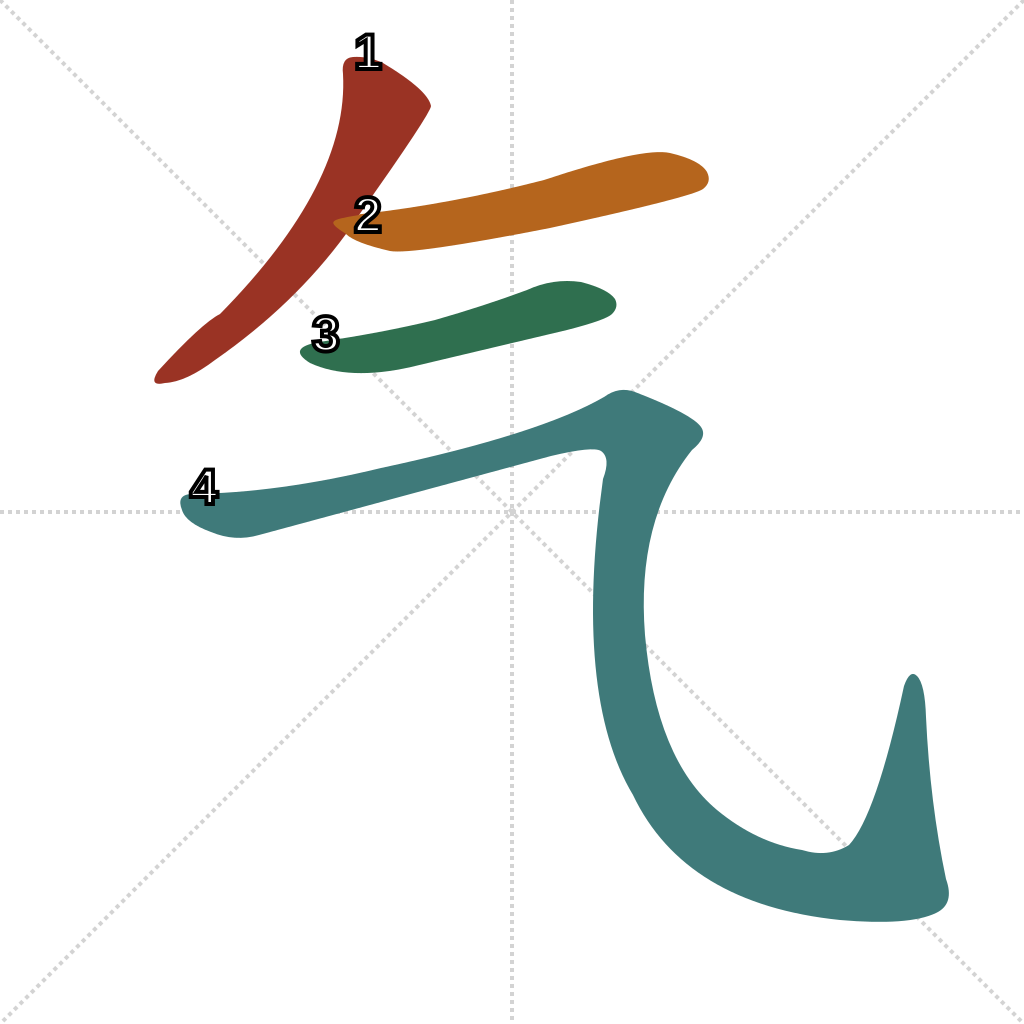
Lesson 20 mentioned 北风 and 南风 in passing, as forecast vocabulary, without teaching the piece both words share. This lesson fills that in: 雨 (rain), 风 (wind), and 气 (air, energy) — three components behind most everyday weather talk, and behind 天气, the word for "weather" itself.
Your three new components
雨
yǔ
rain
8 strokes
风
fēng
wind
4 strokes
气
qì
air, gas, energy
4 strokes
Quick recall — click each card to flip it:
雨
yǔ — rain
风
fēng — wind
气
qì — air, energy
雨 — a cloud with rain falling from it. Wiktionary reads the oldest oracle-bone form directly as a pictograph: drops falling beneath a cloud, with the horizontal stroke now sitting across the top added later as the shape settled. Kangxi radical 173, and one of the script's most productive radicals — it sits over most other weather characters. (Wiktionary: 雨)
风/風 borrowed its shape from the phoenix. Wiktionary traces the earliest bronze forms to a male fenghuang — 凤/鳳 (fèng, "phoenix") — shown in profile with its tail feathers. "Wind" and "phoenix" sounded alike in Old Chinese, so the phoenix glyph was borrowed purely for its sound to write "wind," with no meaning carried over. Later scribes trimmed the feather strokes down for speed, and the Han-dynasty Shuowen Jiezi dictionary misread what was left as 虫 (chóng, "insect") — a misreading, not the real origin. Simplified 风 continues that same long trimming process down to four strokes. Kangxi radical 182. (Wiktionary: 風)
气/氣 — clouds drifting across the sky. Wiktionary reads the oracle-bone form as three stacked horizontal strokes, tracing that drifting motion. To keep the character from being confused with the numeral 三 (sān, "three"), scribes later ran a stroke down through the three lines; the result, 乞 (qǐ), split off to carry only a borrowed, unrelated sense, "to beg." Separately, once 气 itself had been borrowed for other senses, the traditional form 氣 added 米 (rice — from Lesson 16) to help carry the meaning "air, vital energy." Simplified 气 drops that addition and returns to the original, rice-free shape. Kangxi radical 84. (Wiktionary: 气, Wiktionary: 氣)
Literally "big wind." This is the same 风 you already saw in Lesson 20's 北风 (běifēng, "north wind") and 南风 (nánfēng, "south wind") — now you have the piece itself, not just the whole words.
气 pairs with Lesson 8's 天 to name the whole category:
天气tiān qìweather
天+气=天气
Literally "sky-air."
Check your recall
Wiktionary reads the oldest form of 雨 as a picture of a:
The oldest bronze forms of 风/風 actually depicted a:
The Shuowen dictionary's link between 風 and insects is, according to Wiktionary, a:
Simplified 气 differs from traditional 氣 by dropping which piece?
Out in the world: 天气 is the word printed at the top of every weather app and forecast segment. 下雨 and 大风 are exactly what those forecasts describe day to day, and the same 风 reappears in 北风/南风 from Lesson 20.