Lesson 20 · Foundational Components
Directions: 东 / 西 / 南 / 北
The four compass points, alongside the position words from Lesson 3's 中 and Lesson 4's 上/下. These four are everywhere on maps, transit signage, and gate or exit labels.
Your four new components
Quick recall — click each card to flip it:
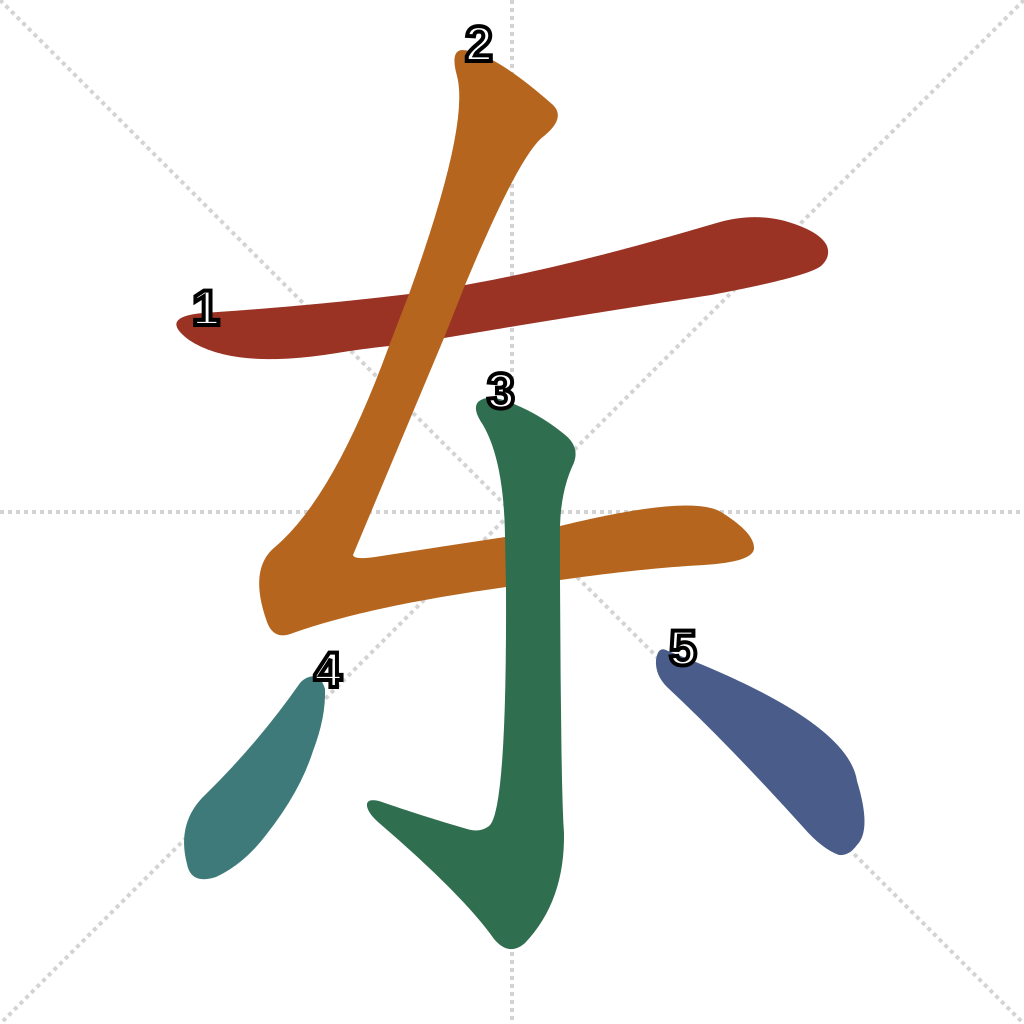
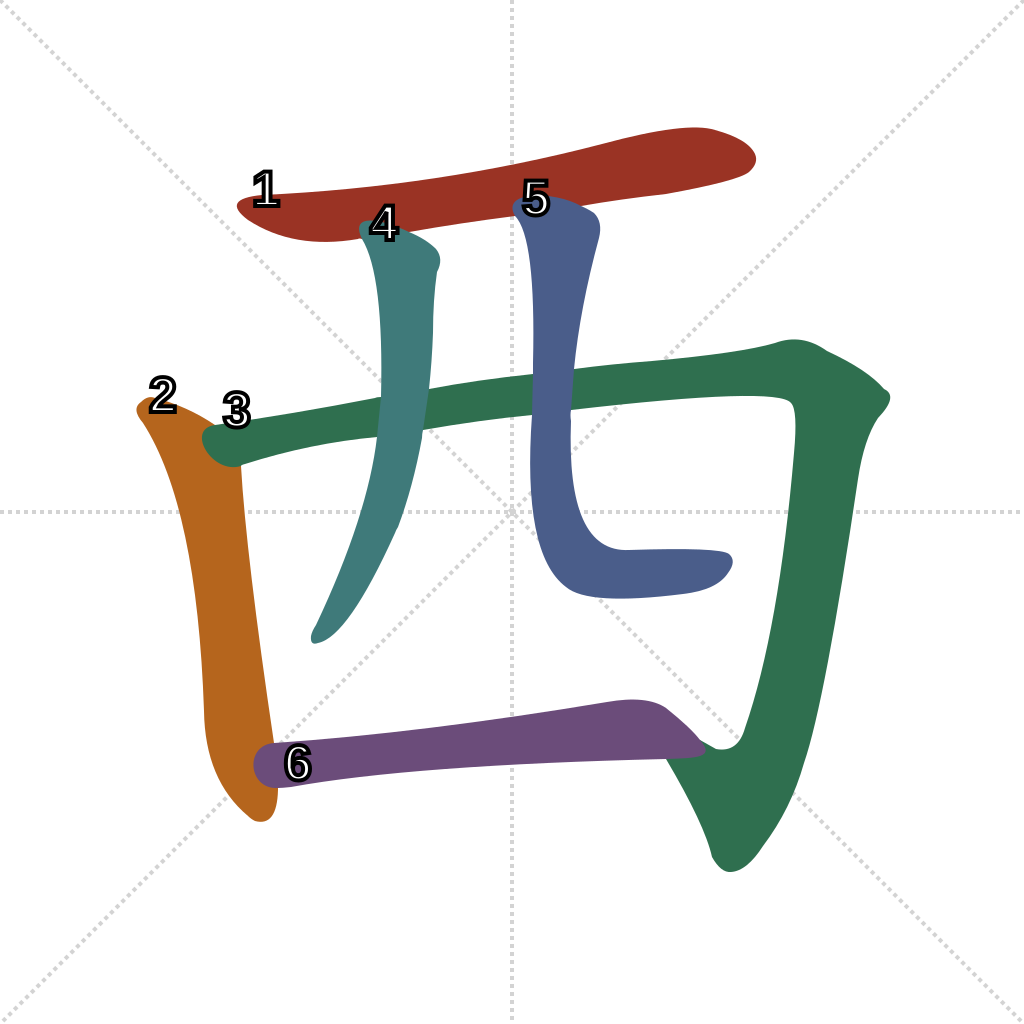
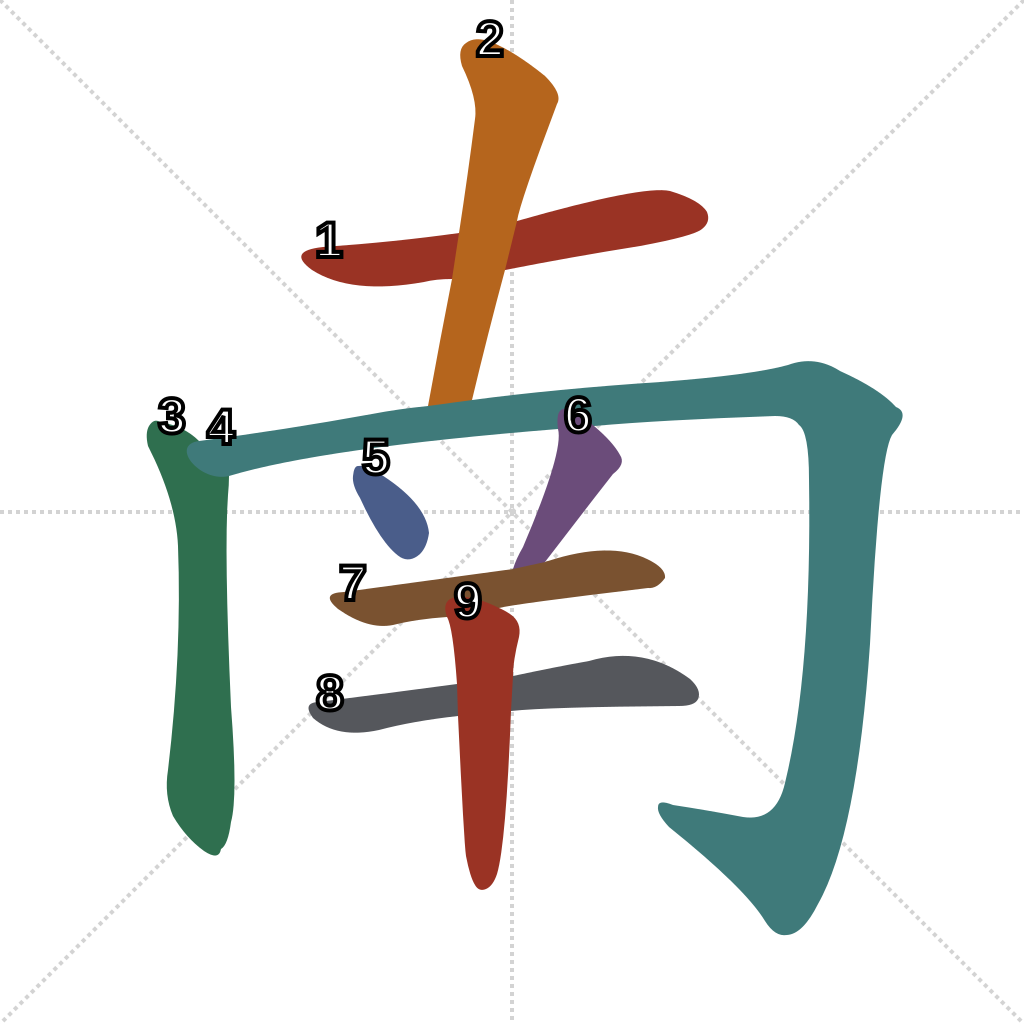
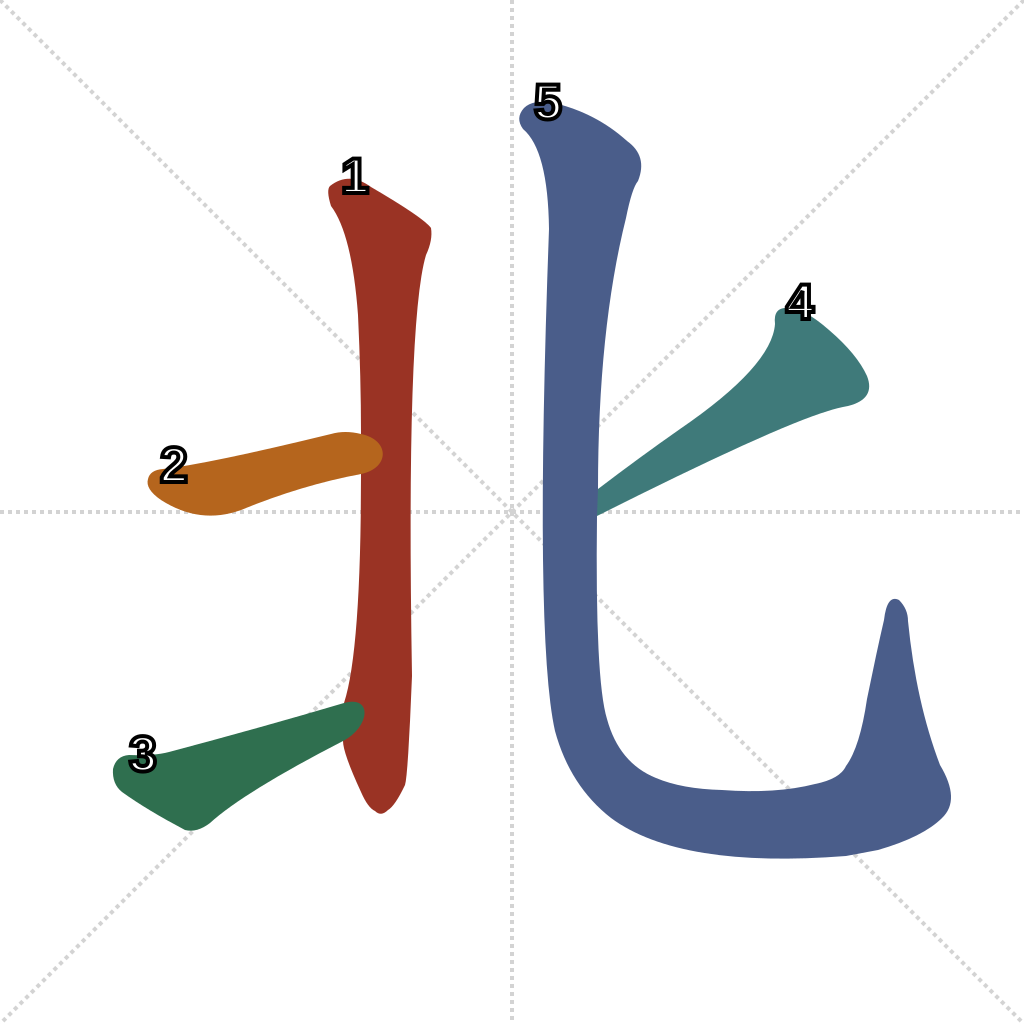
Stroke order
东 — 5 strokes
西 — 6 strokes
南 — 9 strokes
北 — 5 strokes
Examples using these components
东 and 西 side by side form one of the most common words in the language — and its meaning has nothing to do with geography:
东西thing, stuff, object
(Note the tone: 西's own tone flattens to neutral in this word.) Wiktionary records two explanations for this jump. A popular story claims merchants once shopped at separate East and West markets, and "east-west" slid into meaning "goods." Wiktionary treats that as folk etymology. The scholarly account (Yang, 2020) instead traces a semantic path: "east-west" broadened metaphorically to "everywhere," then to "everything," and only later narrowed down to individual "things" — a shift dated to roughly the 7th–9th centuries. (Wiktionary: 東西)
南 and 北 also combine, but more literally:
南北north and south
Plainly literal — used for describing a north-south layout or axis.
All four combine with Lesson 13's 门 (door, gate) the same practical way — the standard pattern for naming a gate, entrance, or exit by compass direction on a park, campus, or old city wall:
东门East Gate
西门 (xīmén), 南门 (nánmén), and 北门 (běimén) follow the identical pattern for West, South, and North Gate.
Check your recall
The "sun behind a tree" story for traditional 東 is, according to Wiktionary, most likely a:
Wiktionary reads the oldest form of 西 as a picture of a:
北's ideogrammic origin shows two people standing:
Wiktionary's two competing theories trace 南's origin to a root meaning either "sky, sun" or:
东西 (dōngxi) as an everyday word means:
Go further
Etymology sources for every character above are linked inline. For the rigorous version of any of them, see the Outlier Dictionary of Chinese Characters.
Out in the world: compass directions label gates and exits at parks, temples, and campuses (东门, 南门…), show up on transit maps and building directories, and appear in everyday weather talk — 北风 (běifēng, "north wind") and 南风 (nánfēng, "south wind") are common in forecasts. And once you notice 东西 in a sentence, check whether it means "east and west" or just "stuff" — context almost always makes it obvious, but it's worth catching yourself doing the disambiguation.