Lesson 8 · Foundational Components
Moon, Sky, Year: 月 / 天 / 年
With all ten digits in hand since Lesson 6, three more characters are enough to read and write full dates: 月 (yuè, "moon, month"), 天 (tiān, "sky, day"), and 年 (nián, "year").
Your three new components
Quick recall — click each card to flip it:
天 decomposes — it's Lesson 3's 大 with one stroke added on top:
天sky, heaven, day
A person (大) with a line above their head — what's above a person is the sky. (Wiktionary: 天)
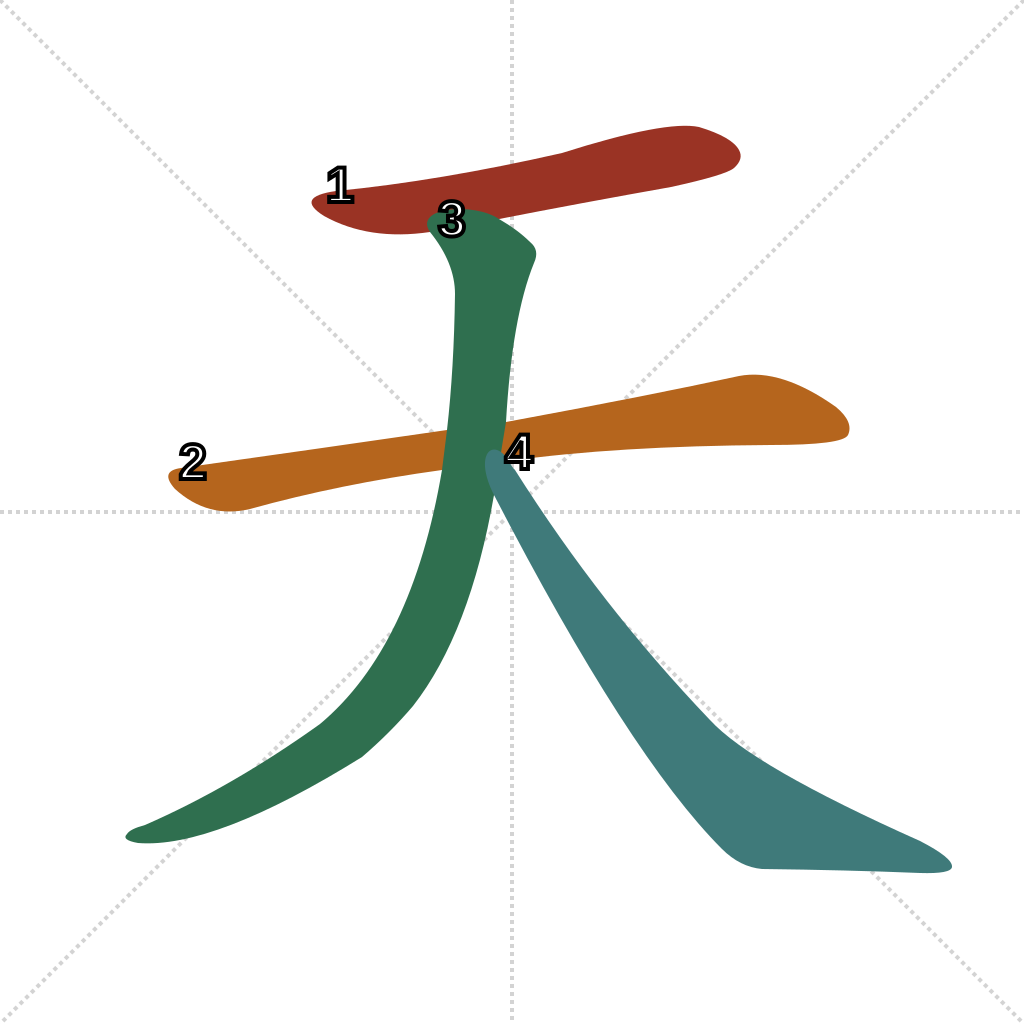
Stroke order
天 reuses 大's order from Lesson 3, with the new top stroke written first (top-to-bottom):
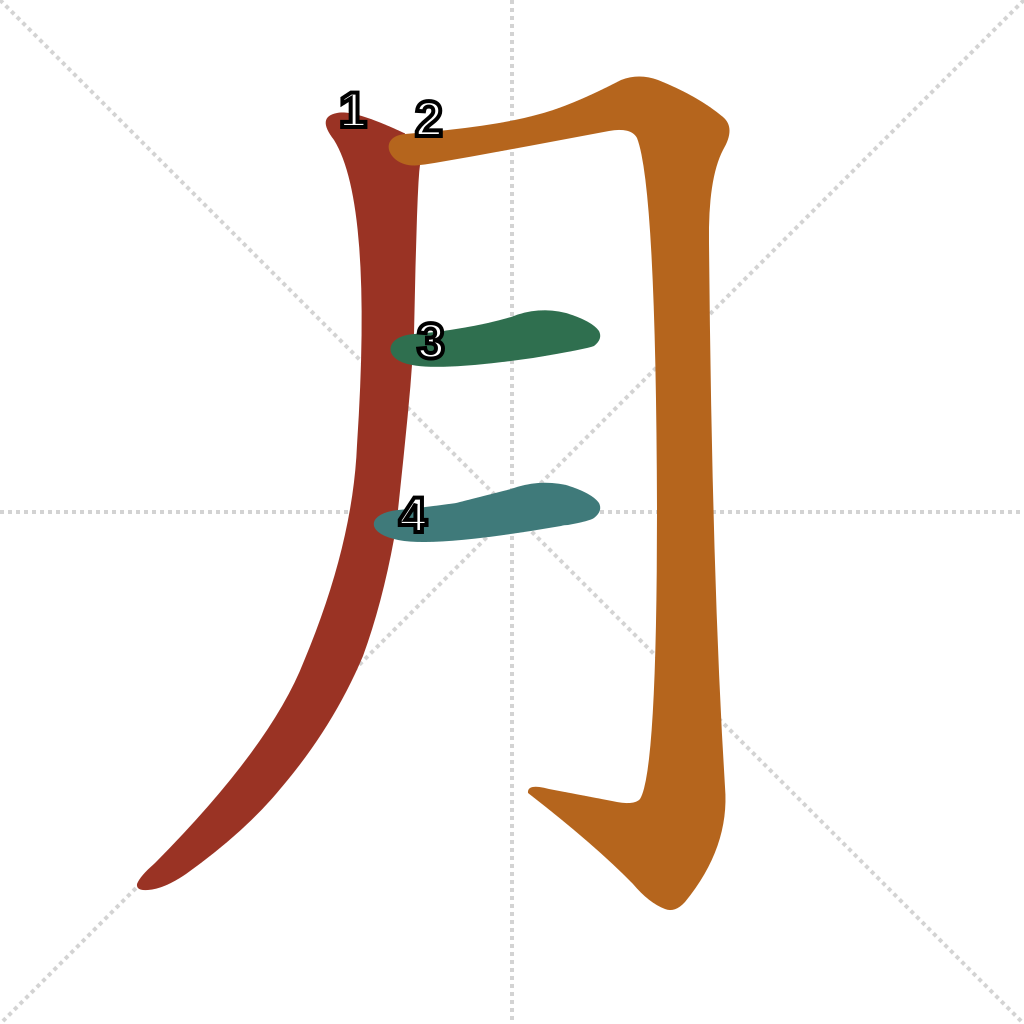
月 — 4 strokes
Outer frame before inner strokes. 月's left side is a 撇 (slightly angled), not a straight vertical — worth noting for handwriting:
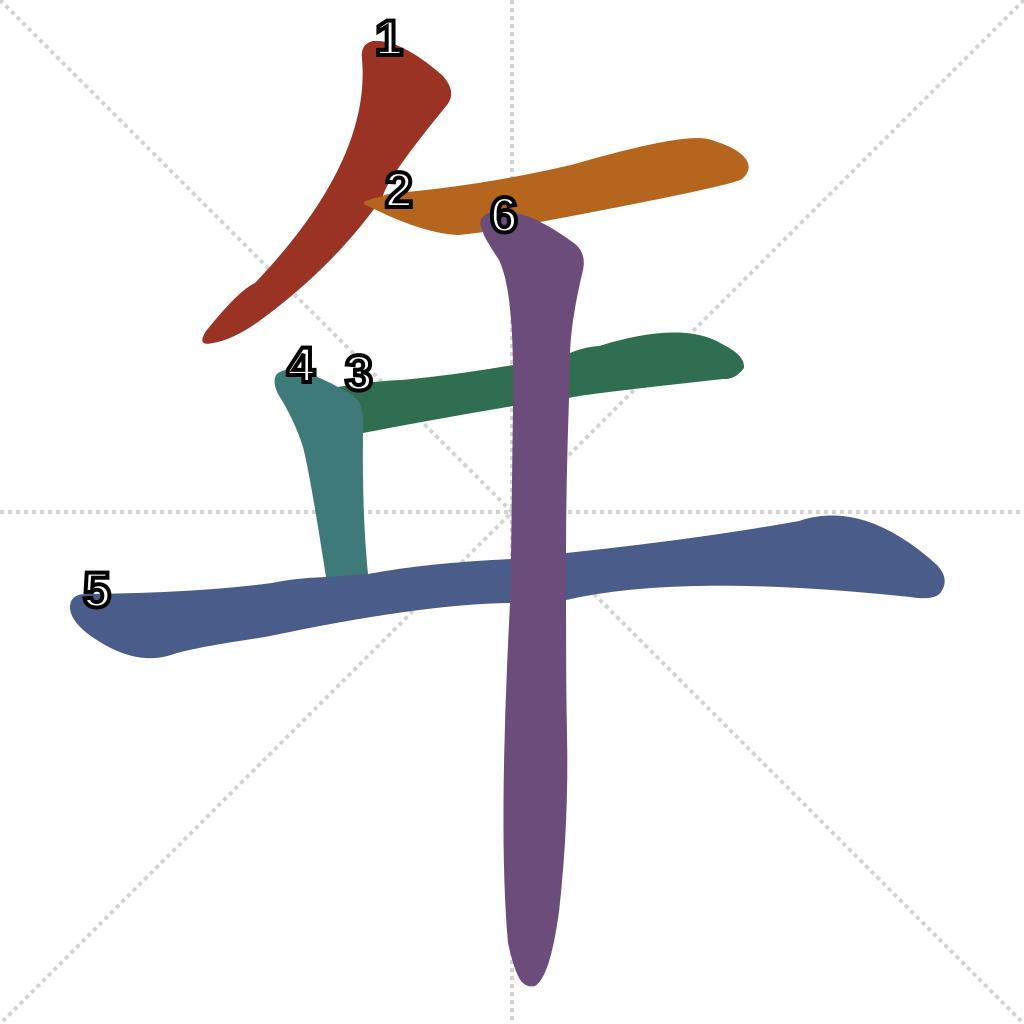
年 — 6 strokes
Examples using these components: today's date
月 paired with Lesson 1's 日 gives one of the most-loved characters in the language:
明bright
The sun just risen and the moon not yet set — dawn, the first light of the day. (Wiktionary: 明)
明 plus today's 天 gives you an everyday word, useful for any travel planning:
明天tomorrow
Literally "bright day."
And with every digit from Lesson 5/6 plus 月 and 日, you can read or write any month-and-day date:
六月二十四日June 24th
Literally "six-month, two-ten-four-day."
年 slots in front of a number the same way, for the year — though in practice, most real-world signage mixes scripts and just writes the year in Arabic numerals before 年 (2026年) rather than spelling it out in characters.
Check your recall
Which character is a pictograph of a crescent moon?
背 (bèi, "back") and 肝 (gān, "liver") both contain a 月-shaped piece that actually means:
天 (tiān, "sky, day") is built from 大 plus:
六月二十四日 reads as:
Go further
Etymology sources for every character above are linked inline. For the rigorous version of any of them, see the Outlier Dictionary of Chinese Characters.
Out in the world: dates are everywhere you'll need to read — train and flight tickets, hotel bookings, opening hours, expiry dates. Try reading the month-and-day portion of any date you next encounter in characters before checking the Arabic-numeral version next to it.