Lesson 4 · Foundational Components
Up, Down, Out, In: 上 / 下 / 出 / 入
Unlike 人/木/水/口/日 or 女/子, none of 上/下/出/入 are pictographs of a thing. 上 and 下 are indicative characters (指事 zhǐshì) — a mark placed above or below a baseline, diagramming a relationship rather than drawing an object: there is no smaller piece inside them, so they don't decompose at all.
Your five new components
Quick recall — click each card to flip it:
出 is not, as is often taught, "two 山 (shān, "mountain"") stacked," even though the modern glyph really does look that way. The real origin:
出out, exit
止 (zhǐ,"foot") stepping out of 凵 (qiǎn, "pit, cave"). (Wiktionary: 出)
Stroke order
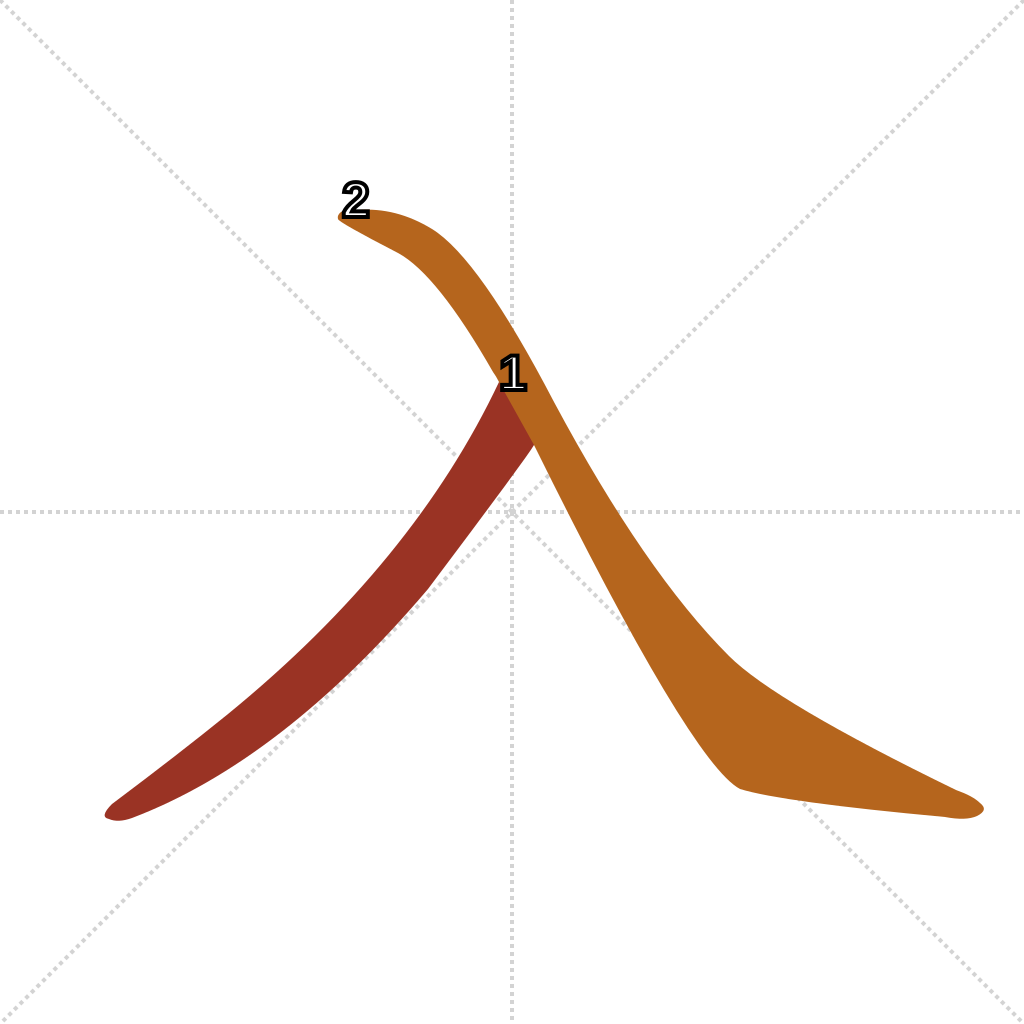
入 is simple — two strokes, same diagonal shapes as 人, just crossing at a different point (see the callout above):
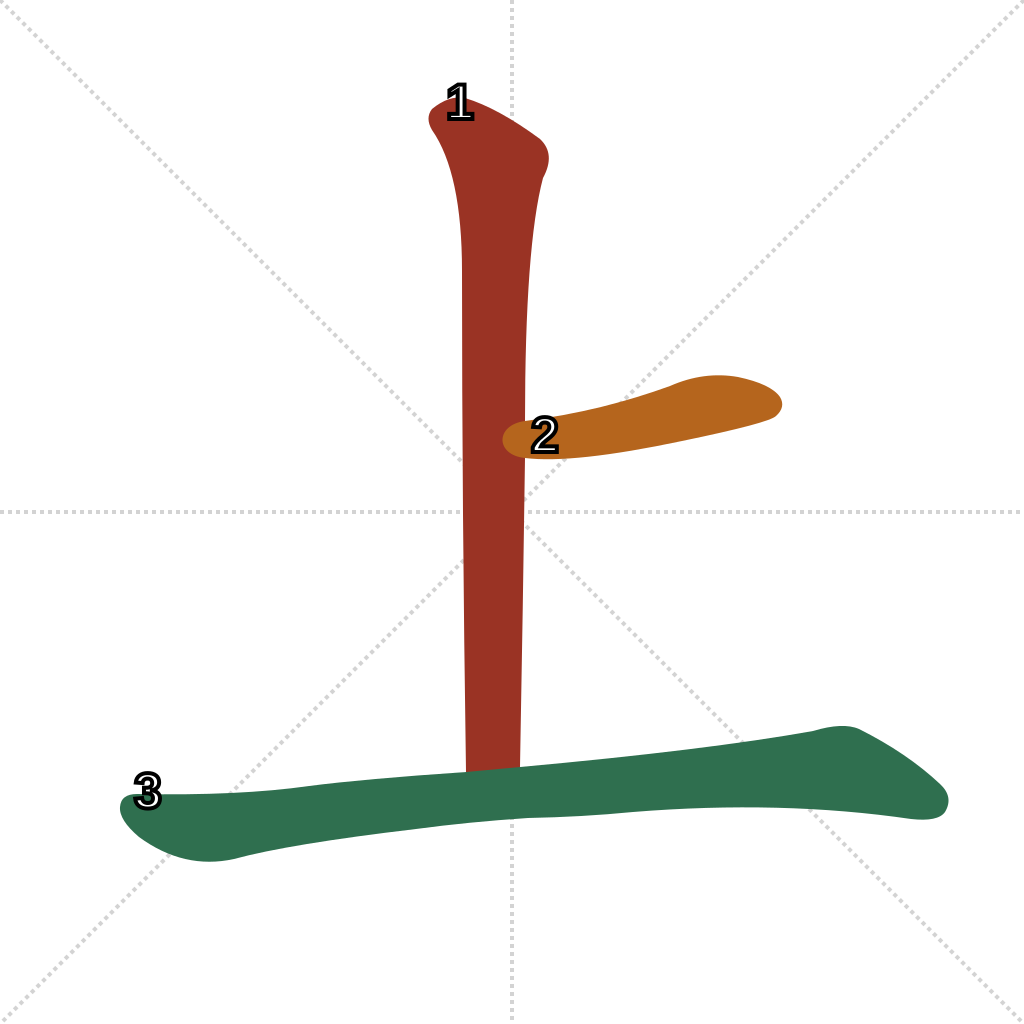
上 — 3 strokes
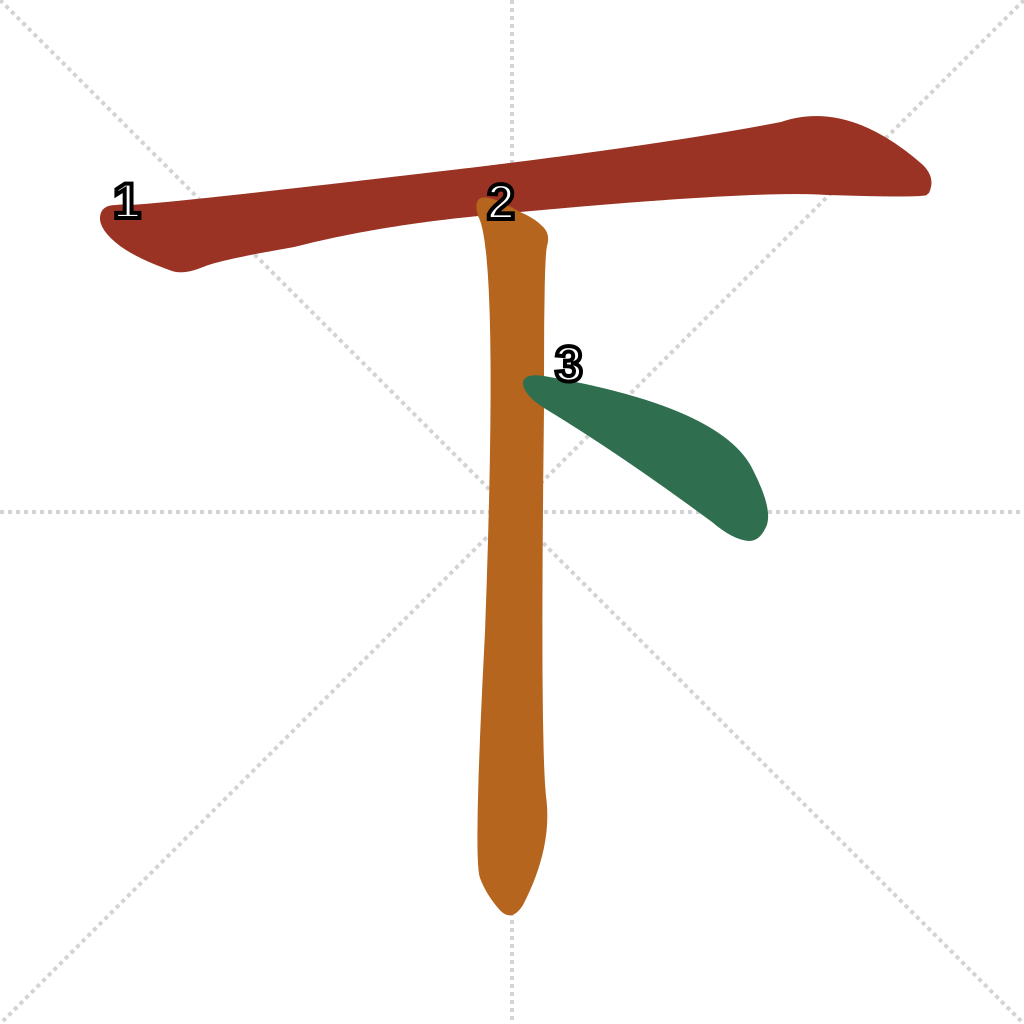
下 — 3 strokes
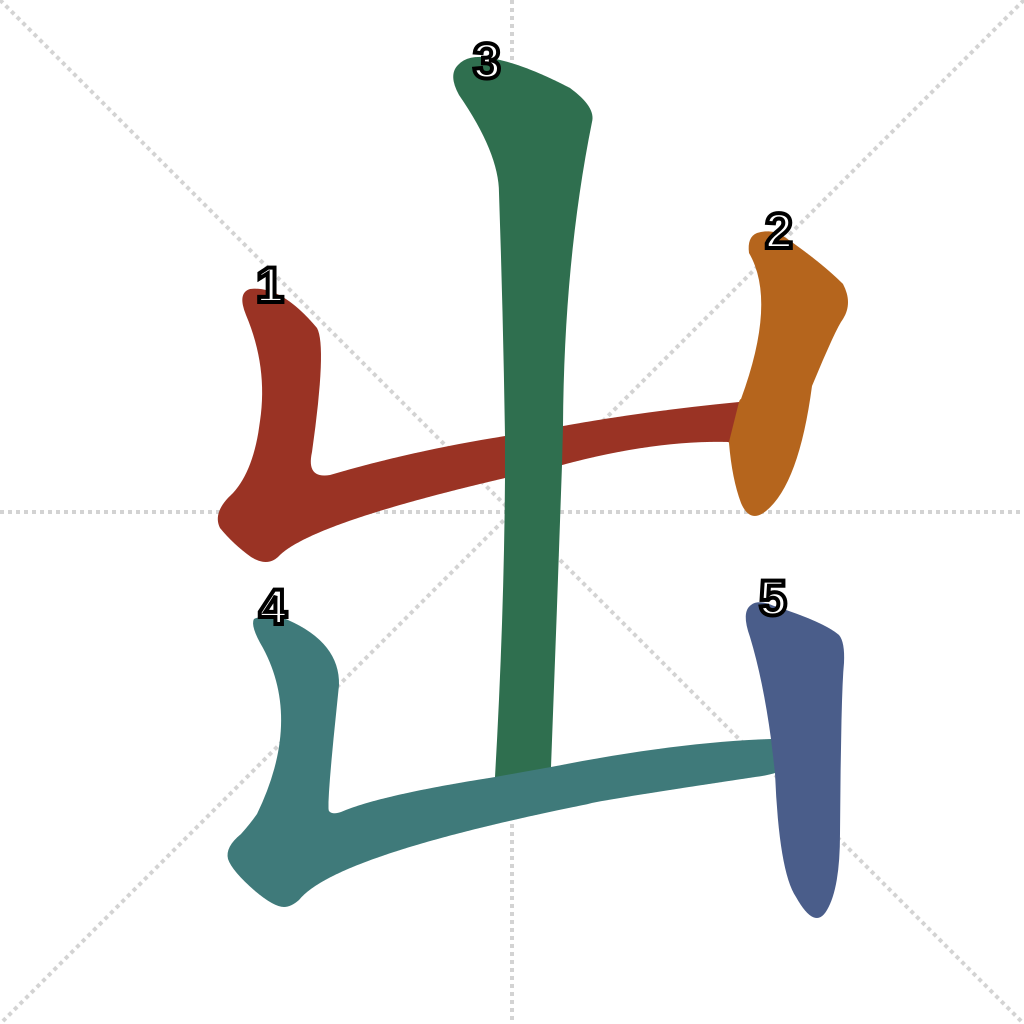
出 — 5 strokes
Think of 出 as two nested ⌐-shapes, each with a vertical post inside, the right section taller than the left:
Examples using these components: characters vs. words
So far every "combination" you've learned — 休, 林, 好, 如, 太 — has been components fusing into one new character. 出口 and 入口 are a different, even more common pattern: two already-complete characters, placed side by side, forming a two-character word — the same way "sun" + "flower" makes the English word "sunflower" without either word stopping being a word on its own. Most modern Mandarin vocabulary works this way, which is why Hacking Chinese's article on words vs. characters vs. components (cited in RESOURCES.md) is worth keeping in mind: knowing 出 and 口 individually is what lets you read 出口 the instant you see it, with nothing new to memorise.
出口exit
入口entrance
口 here is the same "mouth, opening" component from Lesson 1 — an "opening you go out of" and an "opening you go into." 出口/入口 are posted on essentially every door, station platform, and car park in any Mandarin-speaking place you'll visit.
Check your recall
Which component means "enter, into"?
出口 (出 "out" + 口 "opening") marks:
入口 (入 "in" + 口 "opening") marks:
Unlike 好 (女+子), 出口 is best described as:
Go further
Primary source for this lesson's central idea: Olle Linge's words vs. characters vs. components article (Hacking Chinese). For etymology, see the Wiktionary entries linked above, or the Outlier Dictionary of Chinese Characters for the rigorous version.
Out in the world: 出口/入口 are two of the most common compound words you'll come across in public spaces — look for them literally anywhere you next pass through a door, train station, or car park.