Lesson 2 · Foundational Components
Woman and Child: 女 / 子
Two more pictographs, both extremely high-frequency as components: 女 (a kneeling figure, "woman") and 子 (a swaddled infant, "child"). Put them together and you get one of the most common characters in the language — and you'll also meet a component that, surprisingly, often means nothing at all.
Your two new components
Quick recall — click each card to flip it:
Stroke order: meet the hook
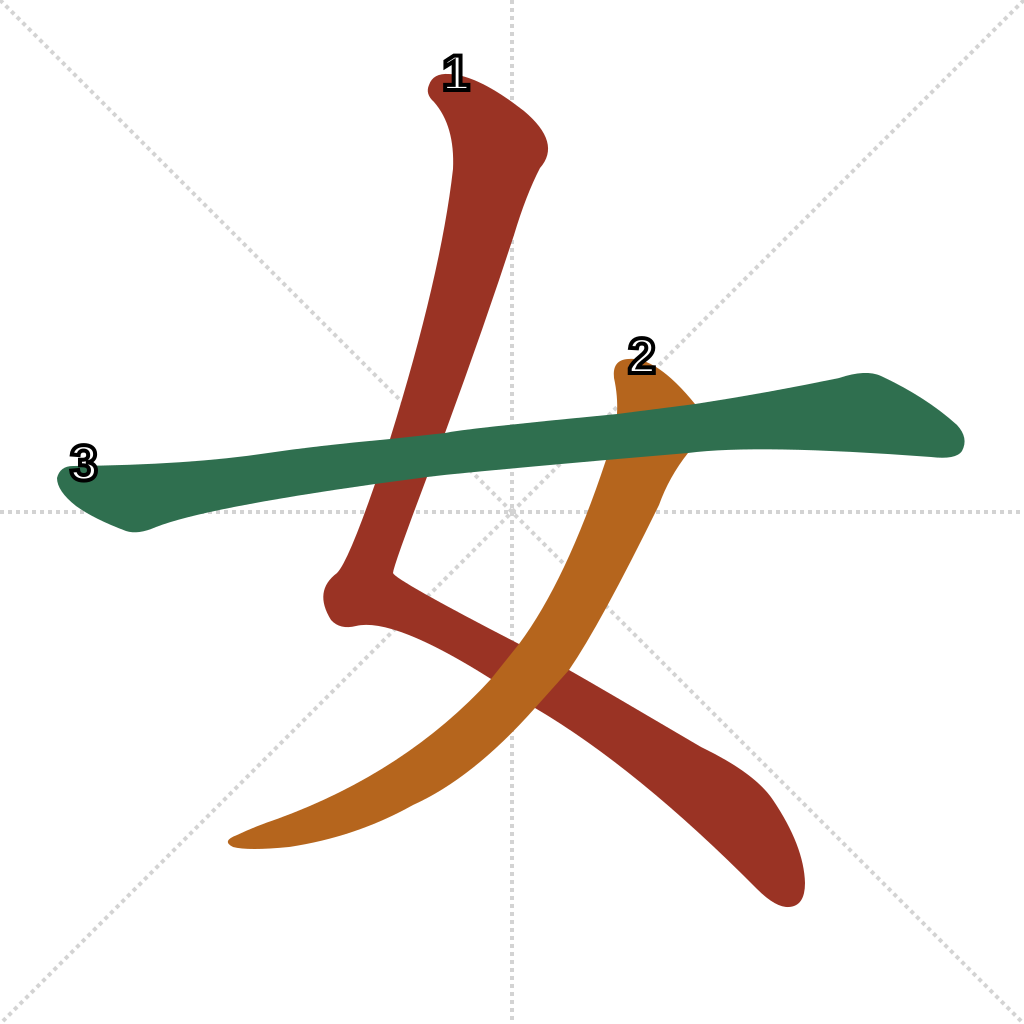
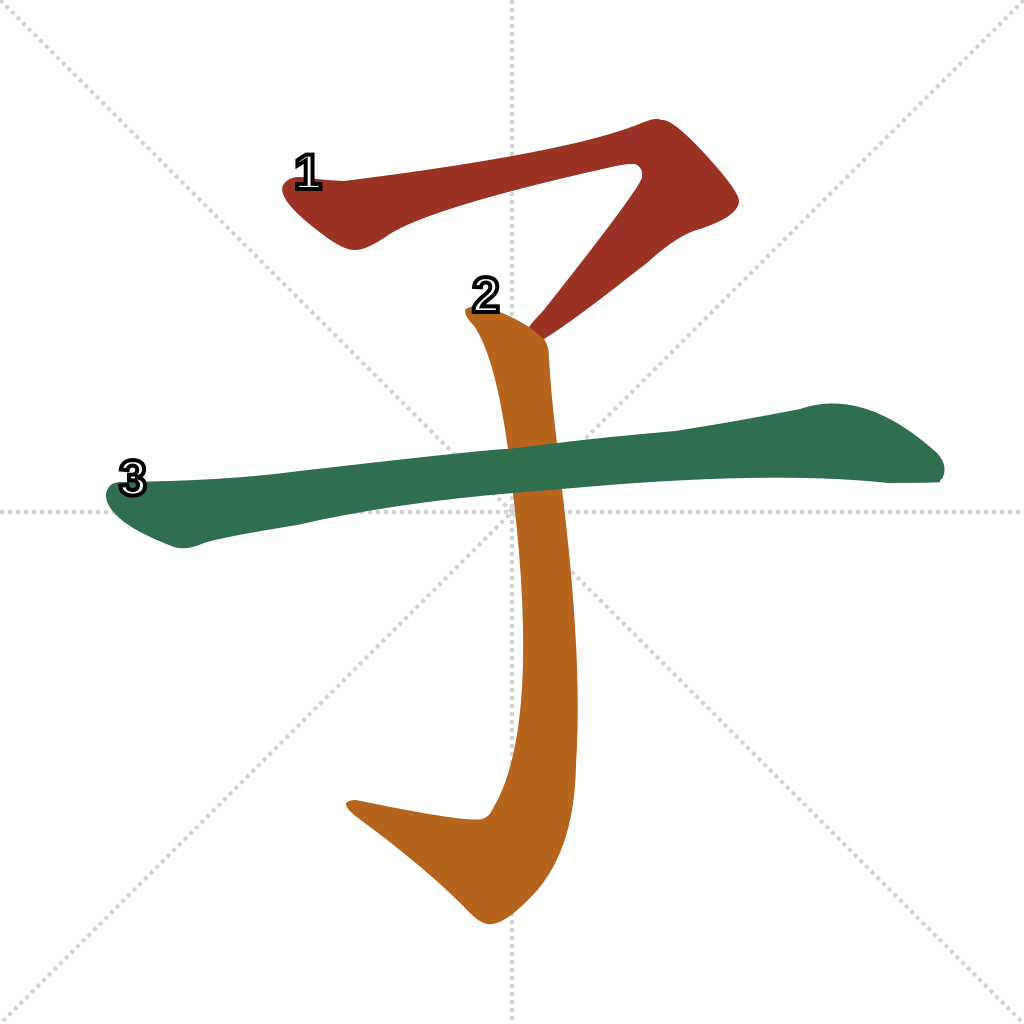
Both 女 and 子 contain a 钩 (gōu, "hook") stroke — the pen changes direction mid-stroke instead of lifting and starting again, something neither of Lesson 1's example characters (木, 口) needed. The top-to-bottom, left-to-right principle from Lesson 1 still applies — the hook is a stroke shape, not a new ordering rule.
女 — 3 strokes
The hook appears in the first stroke (撇折): the pen moves down-left, then bends and continues right — a single connected motion with a direction change mid-stroke.
子 — 3 strokes
子's hook is at the end of the first stroke (横折钩): the main body arc ends with a leftward curl rather than just stopping.
Examples using these components
好good, well, fine
Traditionally read as "woman with child" → wellbeing. (Wiktionary: 好)
如as, like, in accordance with
口 here is doing its usual job — "mouth," i.e. speech — combined with 女: a woman's word, obeyed/followed. (Wiktionary: 如)
Notice 如 reuses 口 from Lesson 1 — this is the whole point of building from a shared component pool: each new lesson should make some of what came before resurface, not just add to a pile.
Check your recall
Which component means "woman / female"?
好 (女+子) means:
如 combines 女 with which already-known component?
In 桌子 (zhuōzi, "table") the 子 ending is acting as a:
Go further
For the etymology behind any character above, the Outlier Dictionary of Chinese Characters remains the most rigorous source. Wiktionary entries are linked inline above for a free second opinion on each combination.
Out in the world: 好 is everywhere — 你好 (nǐ hǎo, "hello"), 很好 (hěn hǎo, "very good"), menus advertising something as 好吃 (hǎochī, "tasty"). Once you can spot 好 itself, you'll start noticing it constantly.