Lesson 12 · Foundational Components
Speech: 言 / 讠
言 sits inside almost every character about talking, asking, telling, and naming — one of the most productive semantic components in the script, on par with 手 and 心 from Lesson 11. Like those two, it contracts into a narrower left-side form when it combines with other pieces. Its full form also builds on a component you already know: 口 (kǒu, "mouth"), from Lesson 1.
Your new component
Quick recall — click the card to flip it:
Stroke order
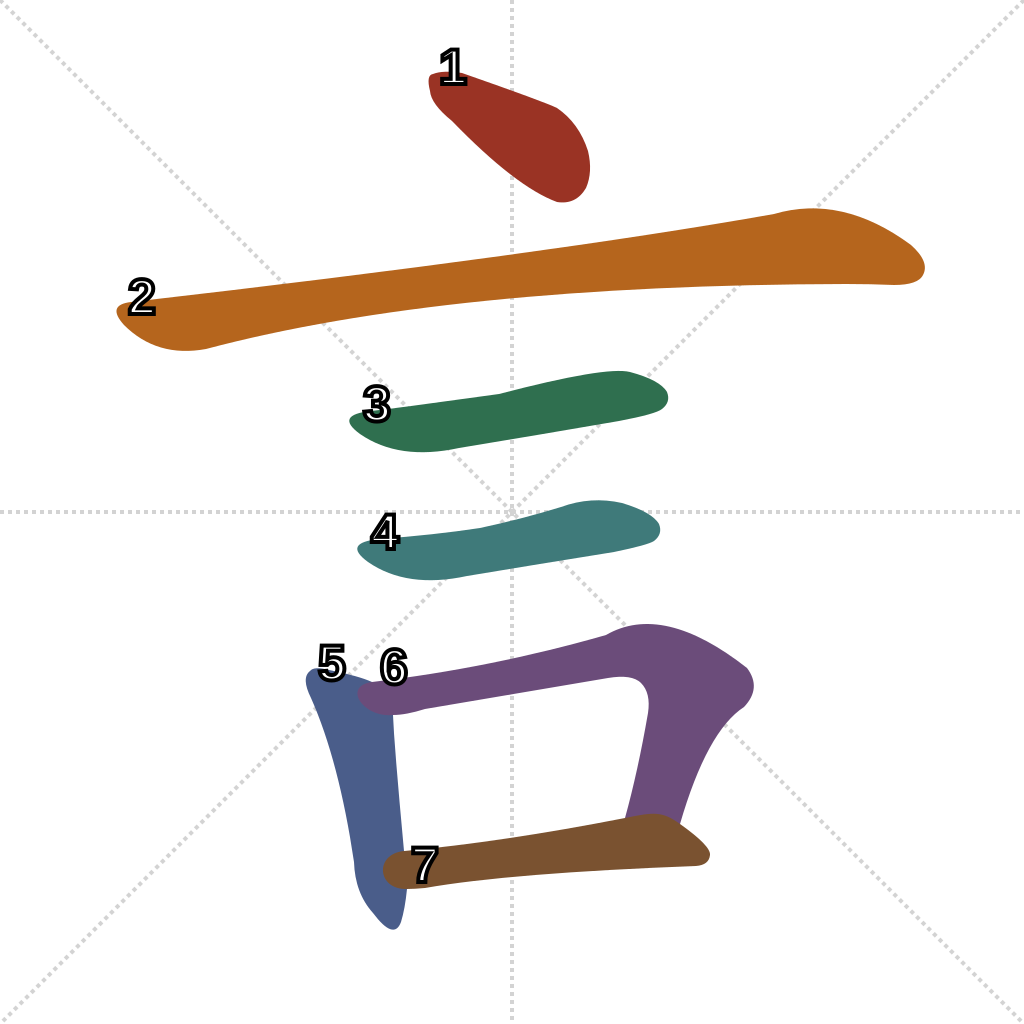
言 — 7 strokes
A dot and two short horizontals form the top, then the frame closes like 口 at the bottom:
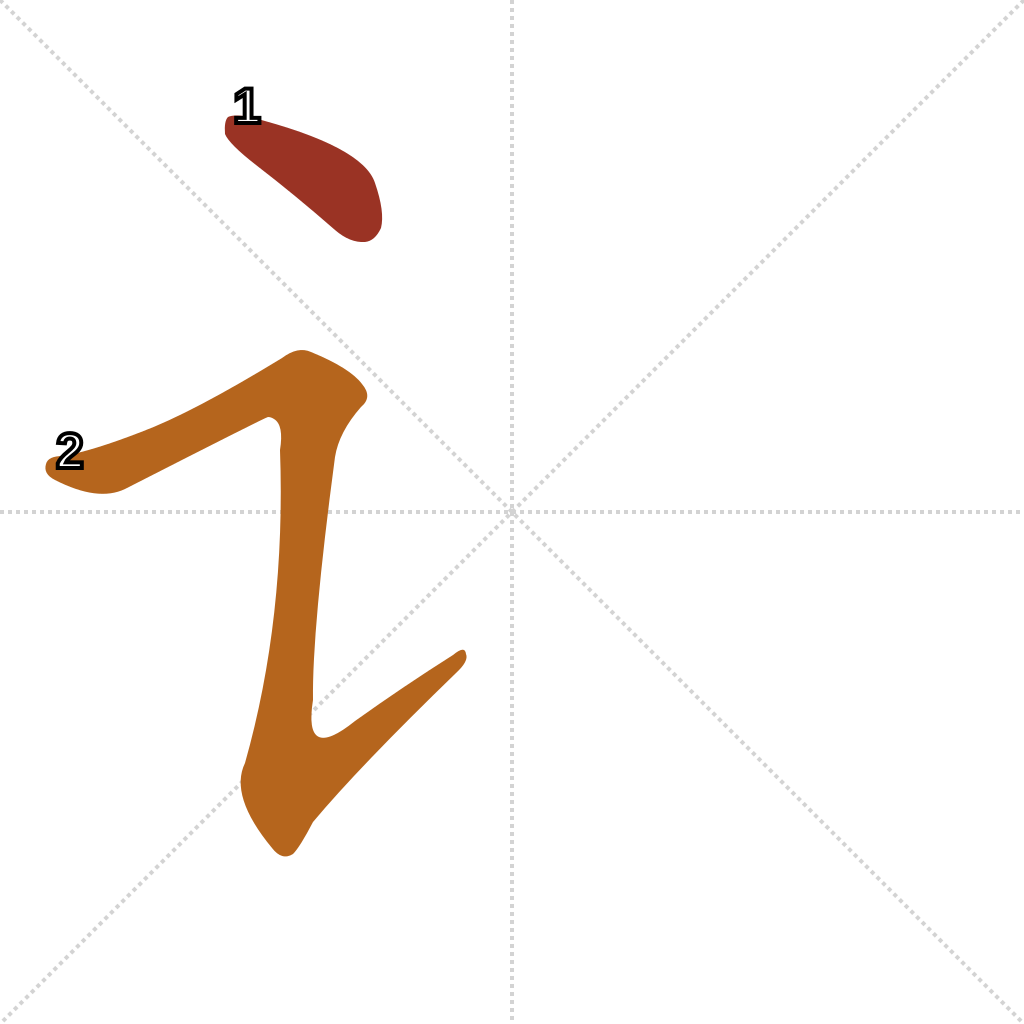
讠 — 2 strokes
A dot, then a single rising stroke:
Examples using this component
说 pairs 讠 with a phonetic partner, the same pattern as 钱 in Lesson 10 and 打/快 in Lesson 11:
说to speak, to say, to explain
讠 is the semantic element; 兑 (duì, "to exchange, to redeem" today) is phonetic only. (Wiktionary: 说)
请 pairs 讠 the same way:
请please; to request, to invite
讠 is the semantic element; 青 (qīng, "blue, green" today) is phonetic only. (Wiktionary: 请)
谢 follows the same pattern:
谢to thank; to decline
讠 is the semantic element; 射 (shè, "to shoot" today) is phonetic only. Doubled up as 谢谢 (xièxie), it's the everyday word for "thank you." (Wiktionary: 谢)
Check your recall
言 combines 口 (mouth) with a mark meaning:
讠 is the contracted left-side form of which full character?
In 说 (讠+兑), 兑 functions as:
谢谢 (xièxie) is the everyday way to say:
Go further
Etymology sources for every character above are linked inline. For the rigorous version of any of them, see the Outlier Dictionary of Chinese Characters.
Out in the world: 请勿吸烟 (qǐng wù xī yān, "no smoking") is one of the most common notices in China — you can already read 请 ("please") at the front of it. 谢谢惠顾 (xièxie huìgù, "thank you for your patronage") is printed on shop doors and receipts everywhere, opening with the 谢谢 you just learned.