Lesson 24 · Foundational Components
Livestock and Insects: 牛 / 羊 / 虫 / 肉
The animals of Lesson 23 were birds and fish. This lesson stays on the farm and adds the character for meat itself — the fourth piece is not an animal at all, but what the first two become on a menu. The Shang-dynasty diviners who scratched the very first Chinese writing onto bone did so, more often than not, onto the shoulder blade of an ox: the Smithsonian's National Museum of Asian Art describes "oracle bones" as principally "ox scapulae... and tortoiseshells." The character you are about to learn names the animal that carried the earliest characters of all. (Smithsonian: Inscribed tortoiseshell (oracle bone))
肉 (ròu, "meat") is the 1,009th most common character in modern Chinese — narrowly ahead of 牛 (niú, "ox, cattle", 1,018th) and 虫 (chóng, "insect, worm", 1,287th), with 羊 (yáng, "sheep, goat") a little further out at 1,337th. None of the four is common alone compared with Lesson 23's cast, but they carry two very high-frequency compounds: 美 (měi, "beautiful", 151st) and 半 (bàn, "half", 513th). (hanziDB frequency list)
Your four new components
Quick recall — click each card to flip it:
Stroke order
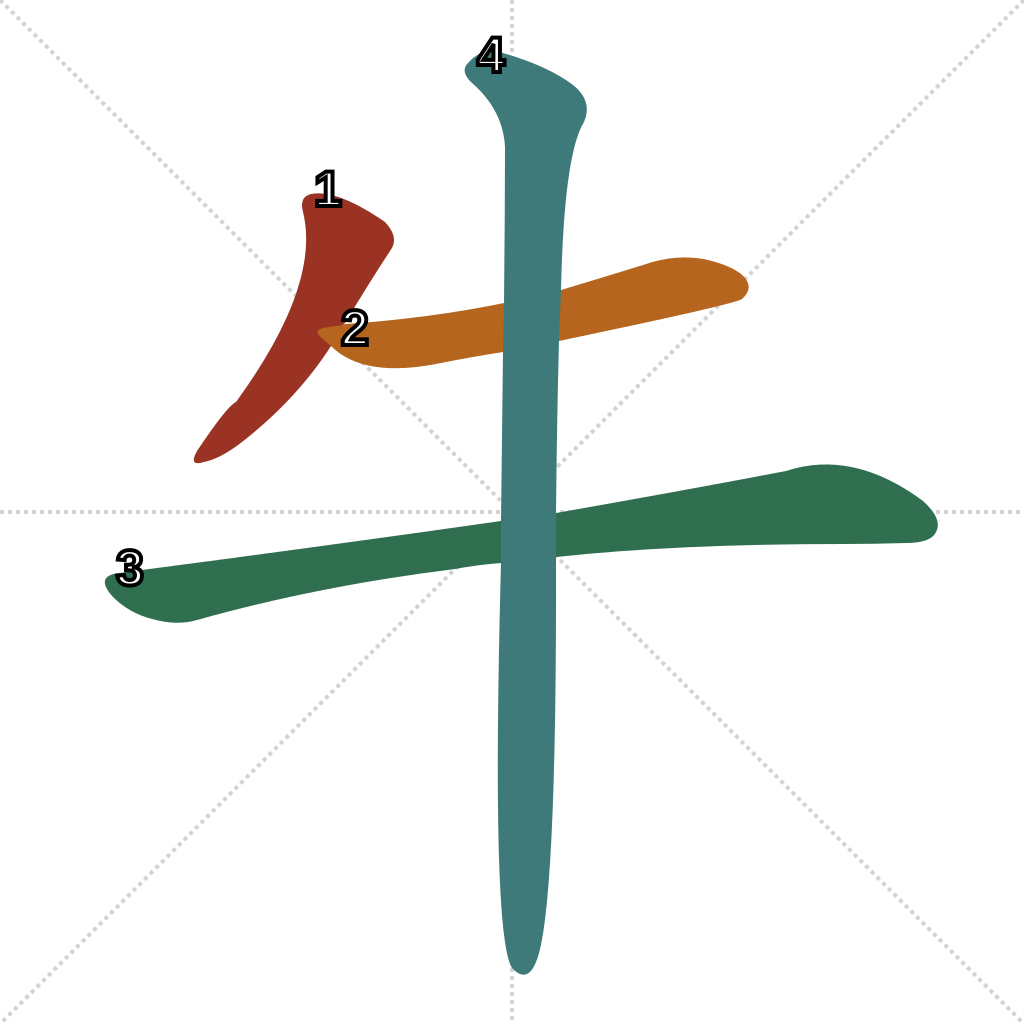
牛 — 4 strokes
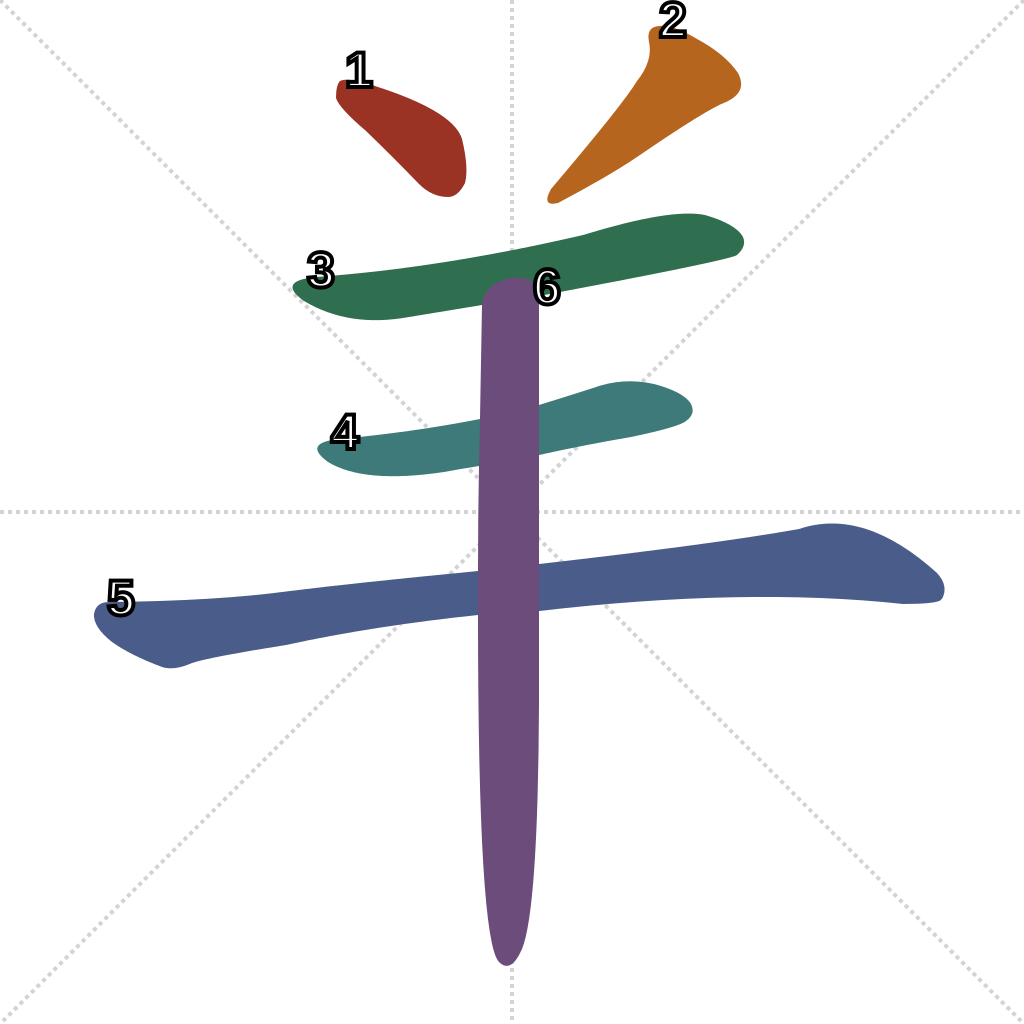
羊 — 6 strokes
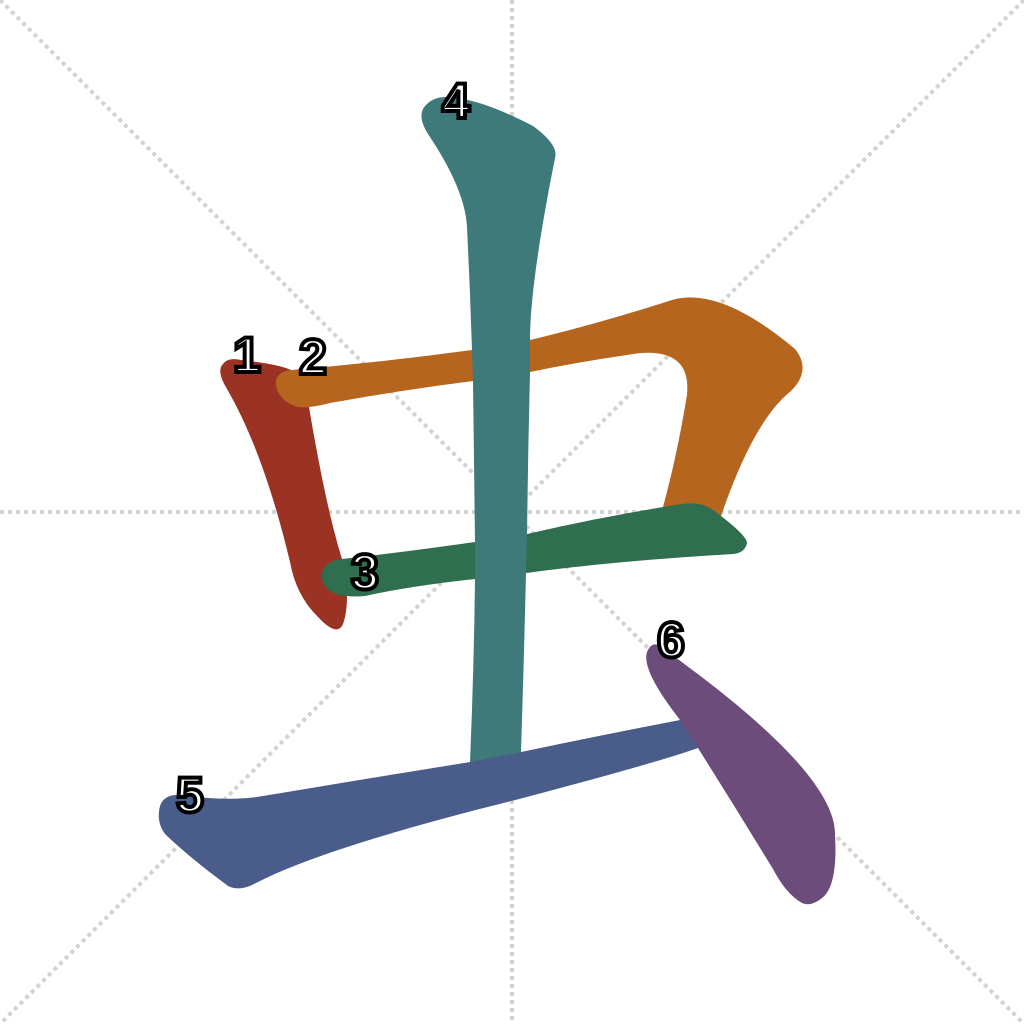
虫 — 6 strokes
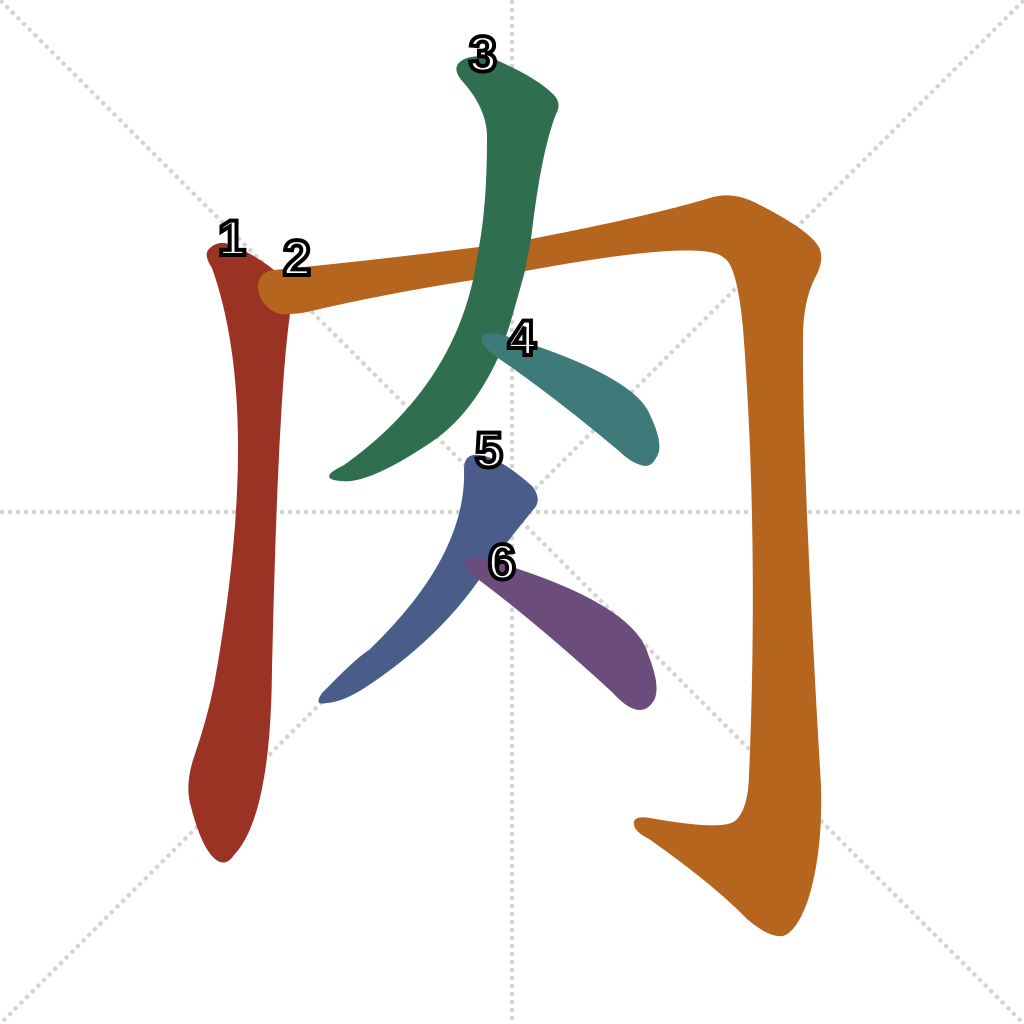
肉 — 6 strokes
牛 opens with the short diagonal that tips the horn, then both horizontals top to bottom, and the vertical hook runs through the whole character last.
Examples using these components
半half
An ideogrammic compound: 八 (bā, "eight" — but here its older sense, "to divide," Lesson 6) plus 牛, picturing an ox cut in two. (Wiktionary: 半)
美beautiful
Traditionally read as "a person (大, from Lesson 3) wearing a headdress (now written 羊) of feathers or ram's horn" — decoration worn on the body became the word for beauty itself. (Wiktionary: 美)
虾shrimp, prawn
虫 marks it as a small creature; the traditional form 蝦 paired it with the phonetic 叚 (jiǎ, "to borrow" — an unrelated meaning, named here only for the sound) instead. Simplification swapped in 下 (xià, "down," Lesson 4) — closer to the modern sound and far simpler to write, the same trade Lesson 22's 进 made when it took 井 for jìn. (Wiktionary: 蝦, Wiktionary: 虾)
肉 rarely needs a partner in this shape: it stands alone as "meat," and pairs with an animal to name a cut — 牛肉 (niú ròu, "beef") and 羊肉 (yáng ròu, "lamb, mutton") are two of the commonest words on any Chinese menu, built from nothing but characters in this lesson.
Check your recall
The oracle-bone form of 牛 drew a bull's head with:
Before it meant "insect," 虫 was a pictogram of a:
半 combines 八 (to divide) and 牛 to picture:
美 traditionally pictures a person wearing:
As a left-hand component, 肉 is drawn identically to:
Simplified 虾 replaces the old phonetic 叚 with 下 because 下 is:
Go further
The best primary source here is the Smithsonian National Museum of Asian Art's own object page on an inscribed oracle bone, which grounds 牛 in the physical object Chinese writing was first carved onto. For the flesh/moon collision described above, Decode Mandarin Chinese's rundown of the meat radical is a useful reference table once you reach the body-part characters that use it.
Out in the world: 牛肉 and 羊肉 are two of the most-ordered words on a Chinese menu, and 虾 sits right alongside 鱼 and 鸡 from Lesson 23 as a third menu staple. 一半 (yí bàn, "half") turns up constantly outside restaurants too — splitting a bill, a distance, an hour — and now you know exactly which ox it pictures.