Lesson 15 · Foundational Components
Vehicle: 车
Today's new component is not a building this time. 车 is a single, self-contained pictograph, and it pairs immediately with Lesson 14's 广 to build one character, and with a phonetic piece from that same lesson to build another. The second of those two is one of the most common characters you'll read on real-world transit signage.
Your new component
Quick recall — click the card to flip it:
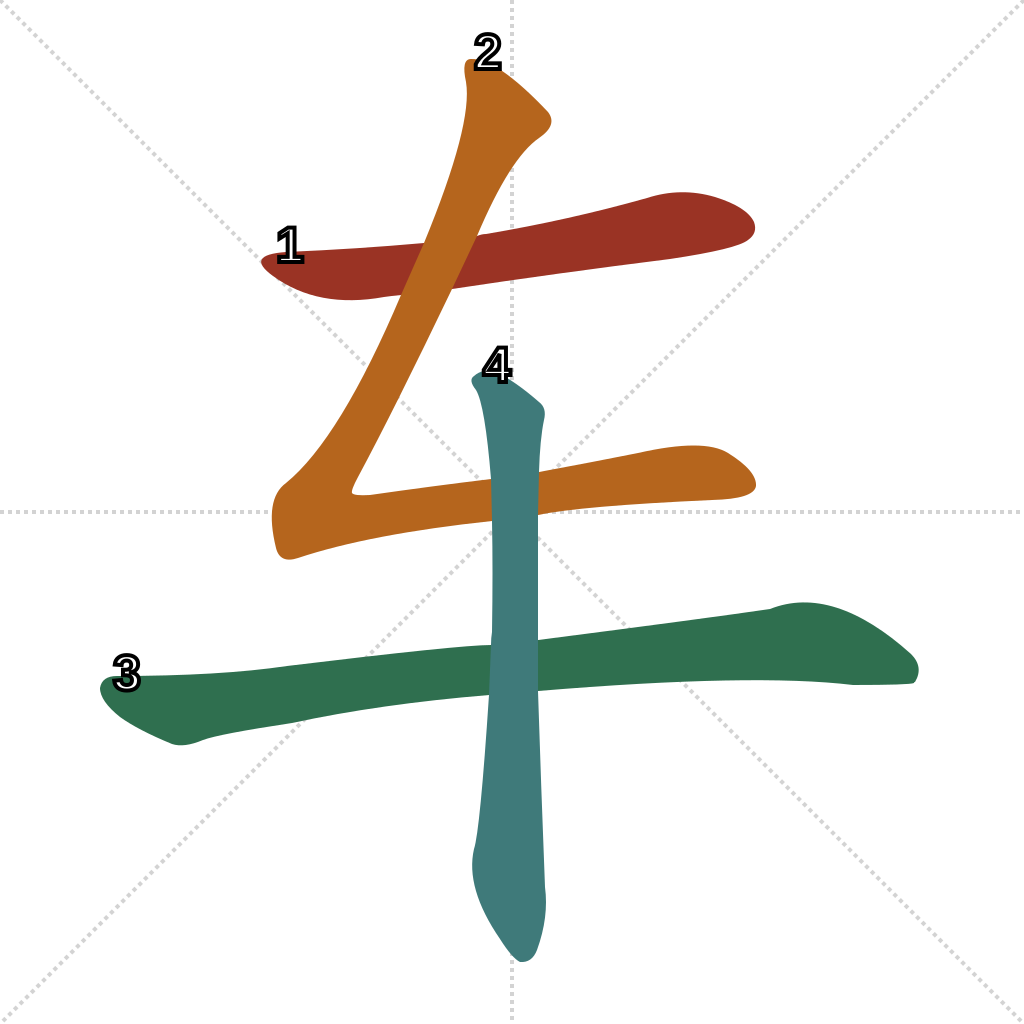
Stroke order
车 — 4 strokes
Examples using this component
First, a plain ideographic compound — no phonetic piece involved, both halves contributing meaning:
库storehouse, warehouse; treasury
广 ("building, shelter," semantic, reused from Lesson 14) plus 车 ("vehicle," semantic) gives a building for housing vehicles — the traditional 庫 is described the same way, a structure built to store a chariot. Unlike Lesson 14's 店 and 厅, neither piece here is doing phonetic work; the whole character is meaning stacked on meaning. (Wiktionary: 庫)
Second, a phono-semantic compound that reuses last lesson's phonetic piece:
站to stand, to stop; station
立 (lì, "to stand", flagged here rather than passed over in silence) is semantic, and 占 (zhàn — the same phonetic piece that gave 店 its sound in Lesson 14) is phonetic, an exact match on both sound and tone. Put together, 站 natively means "to stand" or "to stop." (Wiktionary: 站)
Put the new component and this loanword sense together and you get 车站 (chēzhàn) — "station," literally "vehicle-stop." It is one of the most common two-character words you'll read on transit signage.
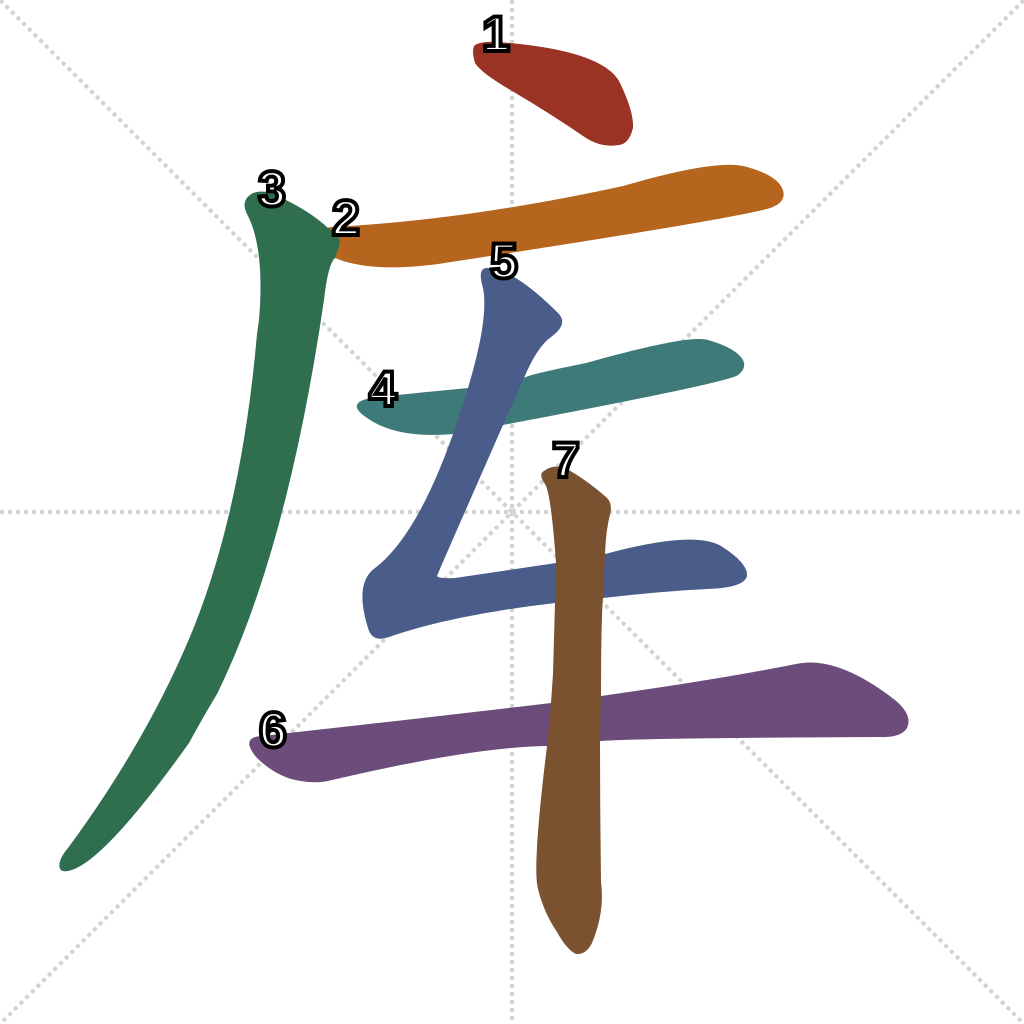
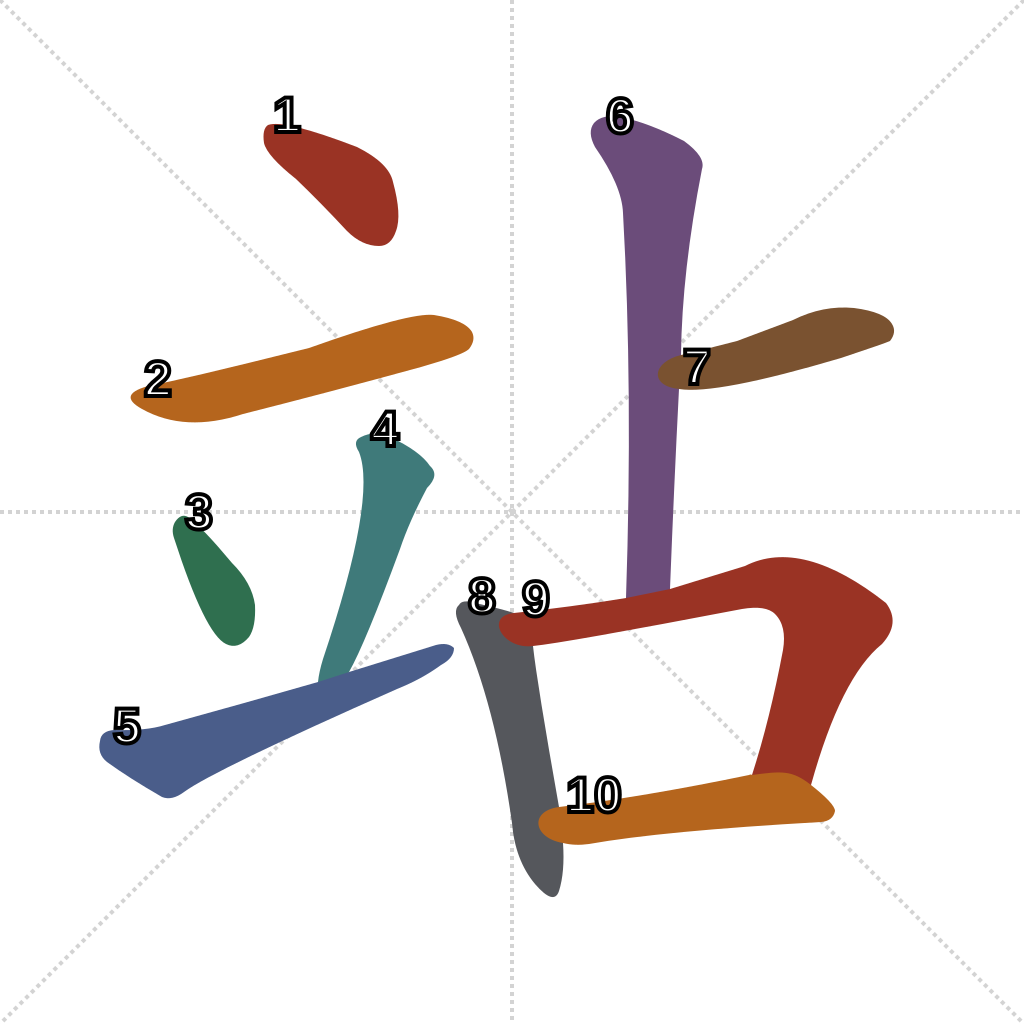
Stroke order for today's characters
库 — 7 strokes
站 — 10 strokes
Check your recall
In oracle bone script, 車 (车's ancestor), viewed from above, depicted:
In 库, the component 车 contributes:
站's semantic component, meaning "to stand," is written:
The "station" sense of 站 entered Chinese via:
Go further
Etymology sources for every character above are linked inline. For the rigorous version of any of them, see the Outlier Dictionary of Chinese Characters.
Out in the world: 车站 (chēzhàn, "station") is on signage everywhere there's a bus stop or train platform. 火车 (huǒchē, "train" — literally "fire-cart," reusing 火 from Lesson 7) and 火车站 (huǒchēzhàn, "train station") extend it directly. 汽车 (qìchē, "car" — 汽, qì, "steam, vapor,") and 停车场 (tíngchēchǎng, "parking lot" — 停, tíng, "to stop," and 场, chǎng, "open ground," neither taught) are two more you'll see constantly, both built around today's 车.